
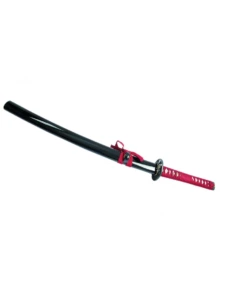
Katanas & Samurai

Japanese katanas: steel, forging and tradition

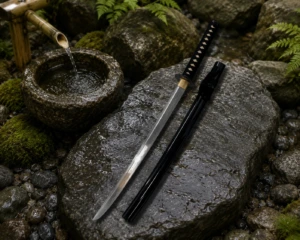
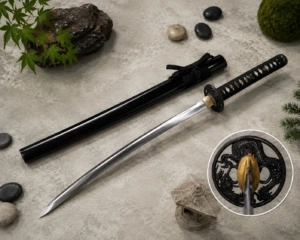
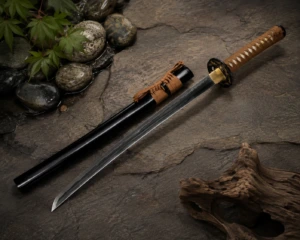
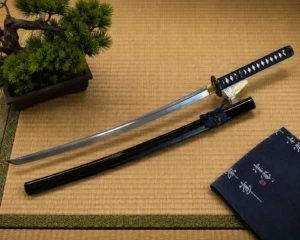
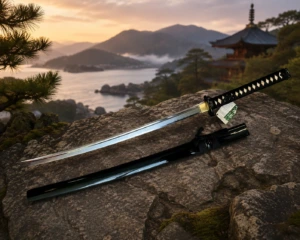
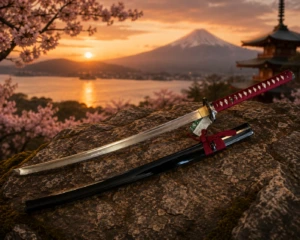
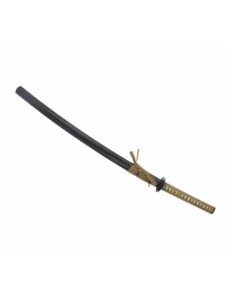
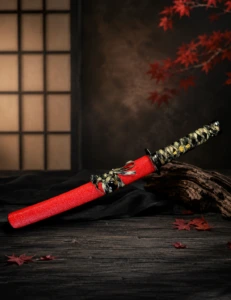
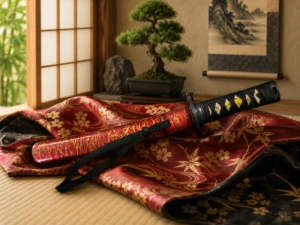
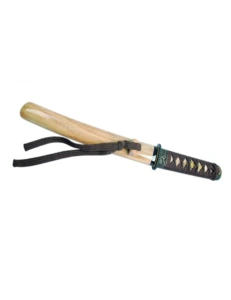
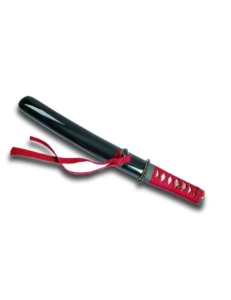
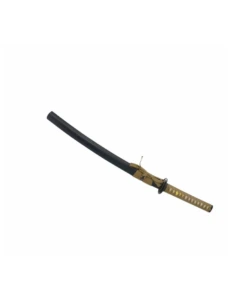
In this collection you will find Japanese katanas and their traditional companions, the wakizashi and the tantō: the three blades that accompanied the samurai. Each product page states the steel and the forging method, so you know exactly what you are holding.

  • Maru: a blade made from a single piece of carbon steel (1045, 1060, 1095…). Tough and simple, ideal for beginners or for practice.
  • Kobuse, Shihozume and Soshu Kitae: several layers of steel of different hardness, as in antique swords, for those looking for something more.
  • Damascus steel: folded layers that draw visible grain patterns on the blade after polishing.
  • Shirasaya and iaitō: the sword in its plain wooden scabbard, and the unsharpened katana for iaidō training.

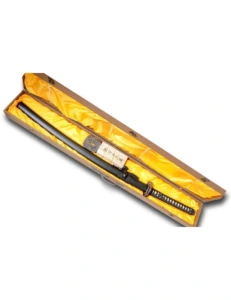
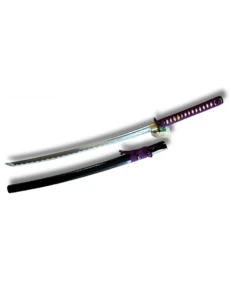
Look at the hamon, the temper line that separates the hard edge from the flexible spine, and at the mounting: tsuba (guard), tsuka (handle) and saya (scabbard). Many come with a wooden box and a maintenance kit.

Want to know more before you choose? In the History tab we explain how a Japanese sword is forged, how the hamon is born and what bushidō means.

1. From iron to blade: how a Japanese sword is made

For centuries, the Japanese swordsmith starting a sword always encountered the same trap. If he made the blade with hard steel, it cut wonderfully… until a poorly placed blow broke it in two. If he made it with softer steel, it withstood impacts better, but could bend and lose its edge. To cut or to resist: the balance had to be found. This whole story is about how, little by little, swordsmiths learned to combine both qualities.

In the early centuries of Japanese metallurgy, one of the fundamental materials was iron sand (satetsu, 砂鉄), which could be transformed into steel through reduction processes in traditional furnaces such as the tatara. This process yielded tamahagane (玉鋼), a material of irregular composition, with areas of different carbon content. The swordsmith's work began by selecting and preparing these different parts of the steel to construct the blade.

The first Japanese swords, dating back to the Asuka and Nara periods (飛鳥時代 and 奈良時代, 7th-8th centuries), when the Japanese court closely observed Tang Dynasty China and neighbouring Korean kingdoms, were straight and simple: the chokutō (直刀), well-suited for combat on foot and head-on, following models brought from the mainland. The curved, more elaborately worked blade came later, during the Heian period (平安時代, 794-1185), when warfare took on a significant equestrian dimension and the shape of the sword began to change.

Meanwhile, swordsmiths developed different methods for working steel. One of their techniques was to heat it and repeatedly fold it over itself to work and homogenise it. The process could generate numerous layers and, depending on how the material was worked, leave a characteristic pattern on the blade: the grain or forging texture that the Japanese call hada (肌).

This pattern may remind one of another famous steel: so-called Damascus. But it's worth pausing here for a moment, because two blades can look similar at first glance and yet have been created through completely different processes. Historical Damascus is related to wootz, a crucible steel produced on the Indian subcontinent whose characteristic pattern comes from its own internal structure. Pattern welding, on the other hand, consists of forge-welding different pieces or bars of iron and steel together and then manipulating them to create a visible pattern.

The Japanese hada belongs to a different tradition. It is the texture or forging pattern that appears on the surface of the blade as a result of working the steel and the way the swordsmith folds and shapes it. Therefore, although a Japanese blade and a steel commercially known as "Damascus" may display patterns that resemble each other, we shouldn't confuse them: the appearance may be similar, but the technique and history behind them can be different.

The leap towards more complex constructions came during the development of the medieval Japanese sword. In the Kamakura period (鎌倉時代, 1185-1333), when the military government established in that city made the samurai the ruling class, the demand for better swords—exacerbated after the Mongol invasion attempts of 1274 and 1281—drove the development of different ways to combine steels with different characteristics within a single blade.

The idea was simple: place the hardest steel where wear resistance and cutting ability were needed, and use softer, tougher steel in other parts of the blade to create a whole capable of better withstanding stress. Over time, different constructions developed, including the kobuse (甲伏せ), a harder steel shell around a softer steel core; the shihōzume (四方詰め), which combines different pieces for the edge, core, sides, and spine; and the sōshū kitae (相州鍛え), associated with the Sōshū school tradition and masters like Masamune (正宗).

Today, modern steels—such as 1045 or 1065—offer a much more consistent and predictable composition than traditional materials. A modern blade made of homogeneous steel, properly treated, can be perfectly robust. When a modern sword is laminated or constructed from different pieces of steel, it doesn't necessarily have to be for the same reason as that of the swordsmiths of old: it can be done to reproduce traditional constructions, obtain specific characteristics, or recover an aesthetic linked to historical forging.

Therefore, among modern swords, we can find 1045 and 1065 steel blades of simple construction, as well as others that use different traditional constructions or are inspired by them, such as kobuse, shihōzume, or sōshū kitae. When a blade is described as maru (丸), it generally refers to a simple construction in which the blade is not formed from a set of laminated steels in the same way as in composite constructions. This helps explain why a single catalogue might include maru families alongside kobuse, shihōzume, or sōshū kitae.

Modern swords also feature designations like 1050, 1060, 1065, or 1095, which identify different types of steel used in specific blades. It's important not to interpret these numbers as an automatic "better" or "worse" classification: a sword's final performance also depends on heat treatment, geometry, blade construction, and the specific characteristics of the piece.

And when the word "Damascus" appears, we now know that we must first ask what technique it actually describes.

The pattern on a blade can tell a story, but not all stories that appear similar originated from the same forge.

2. Fire and clay: how the hamon is born

A newly forged blade did not yet possess the properties that would allow its edge to achieve the hardness needed to keep a good cutting edge. The right steel can acquire great hardness when heated to the required temperature and then rapidly cooled; in a Japanese sword, the real challenge lay in concentrating that hardness especially at the edge, while the rest of the blade retained a greater capacity to absorb stress.

During the Kamakura period (鎌倉時代, 1185-1333), when sword making reached a high degree of specialisation, smiths perfected techniques aimed at achieving precisely this balance. The hardening process is known as yaki-ire (焼き入れ), and it was one of the most delicate moments in the entire manufacturing process: a blade that had survived weeks of forging could crack or warp during quenching.

Before heating it in the fire, the smith coated the blade with a mixture of clay and other materials, in a process known as tsuchioki (土置き). The application was not uniform: a much thinner layer was left on the edge and a thicker layer on the spine. When the blade reached the appropriate temperature, it was cooled rapidly, usually in water. The edge, protected by a thin layer, lost heat more quickly; the areas covered with more clay cooled more slowly.

This difference in cooling modifies the structure of the steel. In the area that cools quickly, martensite, a very hard structure, can form, while the parts that cool more slowly retain softer and tougher structures. The desired result was a blade whose edge could achieve great hardness without making the entire body of the sword equally brittle.

Within the hardened zone, structures may appear that, after polishing, become visible as nie (沸) and nioi (匂), terms used to describe different aspects of the microscopic texture associated with hardening. Along with the other characteristics of the blade, these form part of what the polisher reveals through their work.

And a visible mark remains: the line that visually separates the hardened zone from the rest of the blade is the hamon (刃文). It is not a decoration added later, but the visible result of the hardening process and the way the smith applied the clay. Depending on this application and the tradition of each school, the hamon can take very different forms: from a practically straight line, suguha (直刃), to wavy patterns, like notare (湾れ), or irregular ones, like gunome (互の目).

But fire could still change one more thing. During quenching, the different cooling rates and transformations that the steel undergoes generate stresses within the blade. The result can be a characteristic curve, the sori (反り), whose shape depends on the blade's geometry and the conditions of the hardening process itself. The curve that we immediately associate with many Japanese swords today is therefore not merely an aesthetic matter: it is also the result of how the steel responds to heat treatment.

In addition to the hamon and the sori, some blades incorporate another recognisable element: the bō-hi (棒樋), a longitudinal groove that runs along part of the blade. Different functions are attributed to it depending on the era and school—lightening the blade, reinforcing certain lines of the forging—without any of them being considered the only valid explanation for each case. Nor are all the sori resulting from quenching the same: within that general curvature, there are profiles described with their own names, such as the torii-zori, with a more symmetrical curvature centred on the body of the blade, compared to other profiles where the curvature is concentrated closer to the handle. And at the opposite end of the blade, the point itself also has its own name and its own variations: the kissaki (切先). The chū-kissaki, of medium size, is the most common, although there are also longer or more compact points, each associated with different styles and periods.

Today, differential hardening is still practised on modern blades, even though the steels used are different from traditional ones. With steels like 1045 or 1065, which have a much more consistent composition, the result can be more predictable. When the process is carried out correctly, it can also produce a visible hamon, allowing the effect of the hardening on the blade to be appreciated.

Therefore, when a modern blade has a pronounced hamon, we are not simply seeing a decorative line. We are seeing the mark left by the fire on the steel: the place where the smith decided how the blade should be hardened and where it should retain greater toughness.

3. Anatomy of a sword: the mounting, piece by piece

A Japanese sword doesn't end when the swordsmith finishes the blade. Around that core of steel, a whole set of parts is built that allows it to be carried, used, protected, and, over time, transformed into an object of great artistic value. This set is called koshirae (拵え), the sword's fittings.

During the Muromachi period (室町時代, 1336-1573), with the country fragmented by wars between feudal lords during the Sengoku era (戦国時代, "Warring States period"), sword making reached a high degree of specialisation. A finished sword could pass through the hands of different artisans, each dedicated to a specific part of the assembly.

It all began with the tang, the nakago (茎), the section of steel that remains hidden inside the handle. It is one of the most important parts of the sword because it preserves information about the blade and may bear the smith's signature and other inscriptions. The habaki (鎺), a small metal collar that fitted into the mouth of the saya—the koiguchi (鯉口)—was placed at the base of the blade and helped to keep the blade properly seated. Next came the seppa (切羽), metal washers that helped to adjust and hold together the various parts of the assembly.

Then came one of the most recognisable parts: the tsuba (鍔), the guard located between the blade and the handle. Its main function was to protect the hand and separate the fingers from the edge. Over time, in addition to its practical function, the tsuba became one of the most important artistic elements of the Japanese sword. Craftsmen could work it in iron, copper, and other alloys, incorporating scenes, animals, plants, and symbols. Some came to be valued as small works of art in their own right.

The most intricate part was the handle, the tsuka (柄). Inside was the nakago, while the exterior was constructed using several layers and elements. Beneath the covering, the samegawa (鮫皮), ray skin, could be placed, its surface adding texture to the overall piece. On top of this, the menuki (目貫), small decorative elements placed strategically on the handle, could be added. Besides their ornamental function, these elements could contribute to the feel and comfort of the grip.

The traditional samegawa (鮫皮) came from ray skin, valued for its hardness and the grip it provided beneath the braiding. Today, it coexists with synthetic reproductions that imitate that same grained texture, while other pieces continue to use genuine ray skin—sometimes dyed in colours like red—both under the braiding of the tsuka (handle) and, in some mounts, directly covering the saya (scabbard). Neither solution is more "correct" than the other in a modern piece, but they should not be considered interchangeable: not every surface with that grain necessarily comes from the same material.

Everything was finished with the tsuka-ito (柄糸), the silk or other material cord that was braided around the hilt following precise patterns. The result was not only decorative: it provided a firm surface for holding the sword. At the ends of the tsuka were the fuchi (縁), the collar located next to the tsuba (handguard), and the kashira (頭), the pommel cap at the end of the hilt.

And running through it all was a small piece with a fundamental function: the mekugi (目釘), a peg that passed through the hilt and the nakago and helped to keep them together. Thanks to this system, the sword could be disassembled and reassembled, which also made it possible to change the elements of the mounting.

Outside the hilt was the saya (鞘), the wooden scabbard fitted to the blade. Its manufacture was the responsibility of the sayashi (鞘師), the craftsman specialising in this work. The saya was not a simple generic sheath: it was fitted to the specific blade so that it would be correctly housed inside. From it could hang the sageo (下緒), a cord used to attach the sword to the belt and secure the saya during use.

Not all blades are mounted following this exact same complete scheme. Some tantō, in particular, are presented in an aikuchi (合口) mount, literally "tight mouth": a variant without a tsuba, in which a metal collar directly connects the hilt to the mouth of the saya. This mount is distinct from both the complete koshirae we have just discussed and the shirasaya we will talk about later: it retains the braiding and decoration typical of a functional piece, but deliberately omits the guard.

And here we find one of the most interesting features of the Japanese sword: many of these parts could be changed. The mount was not necessarily a permanent and unalterable structure, but rather a set of elements that could be disassembled, replaced, and combined. The Met specifically points out that the hilt components could be removed and replaced with other sets, and that the mounting elements could also be appreciated as independent works of art.

Therefore, when we look at a complete Japanese sword, we are not just seeing a blade with a hilt and a scabbard. We are seeing the result of the coordinated work of several crafts: the swordsmith who forged the blade, the artisan who made the guard, the one who assembled the hilt, the one who braided the cord, and the one who fitted the saya. Each piece serves a function, but many of them also tell their own story.

Recognising them helps us understand any sword: a tsuka with samegawa, a decorated tsuba, a carefully fitted habaki, or a braided sageo cease to be mere details and become part of a language of their own. A Japanese sword is, in reality, the sum of many hands that worked around the same blade.

4. The samurai's pair: the daishō (大小)

In 1588, Toyotomi Hideyoshi (豊臣秀吉) ordered the so-called "sword hunt", the katanagari (刀狩り). This measure aimed to disarm peasants and other groups not belonging to the warrior class, as part of a broader process of social and political reorganisation. Decades later, during the Tokugawa shogunate and the Edo period (江戸時代, 1603-1868), the use of two swords became closely associated with the status of the samurai. This pair was called daishō (大小), literally "big and small", and became one of the most recognisable symbols of the warrior class.

The long sword was the katana (刀), while the short one was the wakizashi (脇差). During the Edo period, both swords were worn tucked into the obi, with the edge facing upwards. The shorter wakizashi was especially practical in confined spaces, where a long sword could be cumbersome. The Cerralbo Museum, for example, describes its own wakizashi as a weapon used in close-quarters combat, for example, indoors.

But the wakizashi also had another distinctive feature: it could accompany the samurai in situations where the katana had to be left outside. Sources from the British Museum indicate that the wakizashi was carried both indoors and outdoors when the katana was also carried. In certain formal situations, the long sword could be left at the entrance while the short one remained with its owner. In this way, the wakizashi was not simply a "second sword", but a piece that retained practical utility and social presence even inside buildings.

The wakizashi could also play a role in seppuku (切腹), the ritual suicide historically associated with certain members of the samurai class. The Cerralbo Museum records precisely this use, along with its function in close-quarters combat. The tantō (短刀), an even shorter blade, could also be used in certain contexts and, in certain periods, as part of combinations with a long sword.

It is important, however, to distinguish between the three categories frequently found in modern collections and catalogues: the katana is the long sword, the wakizashi is a short sword, and the tantō is a short, dagger-like blade. The fact that a collection includes a katana, a wakizashi, and a tantō with the same decoration or within the same design family does not mean that they historically constitute a three-piece "daishō". The term daishō specifically refers to the pair of long and short swords associated with samurai status, especially during the Edo period.

And here an important difference emerges between "carrying two swords" and forming a true daishō. The idea of the set wasn't necessarily limited to the two blades having exactly the same origin. The defining characteristic was the conception of them as a pair: katana and wakizashi could share the same aesthetic in their mounts, with coordinated motifs, materials, and decorative elements. The Metropolitan Museum holds several examples of daishō and expressly notes the care taken to match their appearance.

In fact, the pieces preserved in museums show that a pair could have a much more complex history. In one of the daishō at the Metropolitan Museum, for example, the katana blade dates from the 16th century, while the wakizashi blade is from the late 14th or early 15th century; the mounts that make them a set are from the 19th century. In another daishō preserved by the same museum, the katana blade dates from 1636, the work of Tadahiro (second generation), and the wakizashi blade dates from the early 17th century, by the smith Masatoshi; again, the mount joining both pieces is later, from the late 18th or early 19th century. This demonstrates that a daishō should not necessarily be imagined as two blades made simultaneously by the same master.

During the Edo period, moreover, the sword gradually took on a dimension that went far beyond its function as a weapon. The long period of peace meant that the mounts, guards, pommels, ornaments, and scabbards acquired enormous aesthetic importance. The Metropolitan Museum itself describes the elements of the mount as true works of art and explains that they could be disassembled, replaced, and adapted to different occasions.

Therefore, when we see a katana and a wakizashi presented as a pair today, the idea of the daishō should not be understood simply as "a large sword and a small one". It is a concept that unites function, status, tradition, and aesthetics: two weapons of different sizes designed to form a recognisable set.

This same logic helps to understand many modern product families that feature a katana, a wakizashi, and a tantō with a common aesthetic. They are related formats that allow for the presentation of the same design line in different sizes, but they should not be automatically confused with a historical daishō.

The next time we see a katana next to a wakizashi, we can look beyond their dimensions. We can ask ourselves if they share a mount, if their designs are coordinated, what era they represent, and how they relate to one another. Because in a true daishō set, the two swords don't tell exactly the same story: they tell it together.

5. From war to the path: when the sword becomes practice

In 1600, the Battle of Sekigahara (関ヶ原の戦い) took place, one of the decisive events in the process that brought Tokugawa Ieyasu to power. Shortly after, in 1603, the Tokugawa shogunate was established, and the Edo period (江戸時代, 1603-1868) began, a long era of political stability and internal peace. For more than two centuries, samurai continued to be part of the Japanese social order, but for many of them, the sword gradually ceased to be a tool commonly used on the battlefield and also acquired a strong significance of rank and status. The Metropolitan Museum points out that swords and their accessories became indispensable symbols of authority and important means of personal expression during the Edo period.

But that relationship between the samurai and the sword changed radically with the arrival of the Meiji era (明治時代, 1868-1912). In 1876, the government enacted the Haitōrei (廃刀令), a law prohibiting certain individuals from publicly carrying swords. This change profoundly affected the old warrior class and also the artisans who had lived for generations from the manufacture and decoration of swords. The Metropolitan Museum itself houses works created after 1876 by masters who continued working, in some cases reproducing styles of ancient blades.

The sword, however, did not disappear. It changed its place.

During Japan's modernisation, the old traditions of weapons training gave way to new ways of understanding martial practice. Some disciplines retained techniques passed down from ancient schools, but also began to acquire an educational and personal development dimension. In this context, the modern conception of budō (武道) developed, understood as a "path" of practice and refinement through a martial discipline.

One of the disciplines that kept the tradition of drawing the sword alive was iaidō (居合道). Its practice is based primarily on the individual execution of kata (型), established forms that begin and end with the sword sheathed. The practitioner recreates an imaginary combat situation and precisely works on posture, movement, drawing, cutting, chiburi (血振り), related to the traditional gesture of symbolically cleaning the blade, and finally nōtō (納刀), the process of returning it to the scabbard. It is not a free fight between two people, but rather a technical practice based on forms.

There are numerous schools and traditions of iaidō. Some traditions preserve lines of transmission that go back several centuries. Among them is Musō Jikiden Eishin-ryū, one of the ancient iaijutsu traditions that continues to be practised today. This helps us understand an important difference: modern iaidō did not emerge from nothing after 1876, but rather incorporates and reorganises much older traditions within a contemporary framework.

Alongside iaidō, we also find battōdō (抜刀道), a term used for practices focused on drawing and cutting techniques. Depending on the school and tradition, these disciplines may have different objectives and methods, so they should not be considered simply interchangeable names for the same activity.

And here a fundamental question arises: with what sword is training done?

Using a truly sharp Japanese blade to practise iaidō movements thousands of times would pose an unnecessary risk. That's why iaitō (居合刀) exist; these are training swords that typically don't have a cutting edge. They allow users to practise handling, drawing, and sheathing a sword without turning every technical error into a real cut. Their construction can vary depending on the manufacturer and the type of piece, so it shouldn't be assumed that all iaitō have exactly the same weight, balance, or materials.

It is also important to distinguish between a "training sword" and an "iaitō". A training sword is a broader concept: it can refer to different pieces intended for practising specific techniques, while the term iaitō is specifically used for swords primarily intended for the practice of iaidō and other forms of sword training. Therefore, not every commercially available piece presented as a training sword should automatically be identified as a traditional iaitō.

The situation is different when practising tameshigiri (試し斬り), the test cut. In this discipline, a blade with real cutting ability is used to work on appropriate targets, traditionally including the rolled-up tatami omote. Here, the technique ceases to be merely a formal representation: the blade must physically pass through the target, and the practitioner must precisely control the angle, trajectory, and execution of the cut.

Thus, the history of the Japanese sword does not end when it ceases to be a common weapon of war.

It was first a tool of combat. Later, it also became a status symbol. And, over time, some of the techniques associated with it found a new life as training disciplines.

The sword changed its setting, but it didn't disappear.

It moved from the battlefield to the dōjō.

And there, facing an opponent who is no longer present, the objective ceased to be solely to defeat another.

It also became about learning to control one's own movement.

6. Symbols on steel: flowers, dragons and skulls

A Japanese sword could not only showcase the skill of the one who forged its blade. It could also become a surface for depicting flowers, animals, landscapes, figures, and symbols. Especially on the fittings—the tsuba, fuchi, kashira, menuki, and other elements of the tōsōgu—artisans developed an extraordinarily rich artistic language.

One of the most recognisable motifs is the sakura (桜), the cherry blossom. In Japanese culture, the cherry blossom is deeply connected to the beauty of the ephemeral and the awareness that seasons, people, and things change. This sensibility appears in Japanese art from very ancient times and can also be found represented in the decorative arts related to swords. The Metropolitan Museum points out precisely how cherry blossoms were used in Japanese art to express this awareness of the passage of time and the fleeting nature of beauty.

On sword fittings, the sakura was not simply an abstract symbol. There are historical tsuba in which cherry blossoms become the main motif of the design. Some were made using openwork—sukashi (透かし)—, relief, or inlays of other metals. The Metropolitan Museum, for example, holds several tsuba from the 17th to the 19th centuries decorated with cherry blossoms and branches, some embellished with gold, copper, or other decorative techniques.

Another frequently appearing motif is the dragon, ryū (龍). Its presence in Japanese art is related to a long iconographic tradition of Asian origin, and dragons appear represented in different forms and contexts. On swords, they can be found engraved on the blade itself or depicted on the fittings of the mount. The Metropolitan Museum, for example, houses an Edo-period nanban tsuba (南蛮鐔) carved in openwork (sukashi, 透かし) with two dragons chasing a jewel, a style clearly marked by foreign influence on a profoundly Japanese object.

Alongside the dragon, another related motif sometimes appears: the carp, koi (鯉), depicted swimming upstream or over a waterfall. This motif incorporates a legend of Chinese origin—the carp's passage through the Dragon Gate (龍門, Longmen)—which also reached Japan: the carp that manages to swim upstream transforms into a dragon. Therefore, when a tsuba or saya combines the carp and the dragon in the same composition, along with other motifs such as the lotus, these are not isolated symbols, but rather two halves of the same story: the effort and the transformation that can follow.

But here it's important to make a distinction: a motif doesn't necessarily have a single meaning. A dragon can be associated with certain ideas of power, protection, water, or supernatural forces within the Asian artistic tradition, but we cannot say that every dragon depicted on a sword had exactly the same intention. To interpret a specific piece, one must consider its era, the artisan, the school, the other elements represented, and the context in which it was made.

The sakura and the dragon do not exhaust the repertoire of natural motifs that can be found on a sword mount. Bamboo (竹, take), associated with flexibility and resistance to the wind, and birds—cranes or other species traditionally linked to good fortune or longevity—also appear, especially in techniques like inlaid mother-of-pearl (螺鈿, raden), as decorative motifs with their own meaning within the same tradition that gave rise to the sakura or the dragon.

During the Edo period (江戸時代, 1603-1868), this artistic dimension reached extraordinary sophistication. Craftspeople specialising in sword fittings developed their own techniques and styles, and tsuba could incorporate entire scenes, animals, plants, landscapes, and literary or theatrical references. Some pieces are veritable miniature works of art. The Metropolitan Museum's collections showcase the enormous variety of these works and document numerous specialists who worked in Edo and other cities during the 18th and 19th centuries.

A good example of this complexity is an 18th-century tsuba in the Metropolitan Museum depicting a shishi, the guardian lion, amidst peonies, referencing a scene from the Noh play Shakkyō. Here, the decoration is not merely a pretty drawing: it contains a cultural reference that could be recognised and appreciated by anyone familiar with the represented tradition.

And then we come to contemporary swords.

Today we can find tsuba and mounts directly inspired by traditional Japanese motifs, but also designs that clearly belong to the modern imagination. Dragons, demons, fantastical warriors, or skulls may appear on current pieces intended for collecting or decoration. In these cases, we must distinguish between a documented historical motif and a contemporary creation inspired by Japanese aesthetics.

The skull is a good example. Although skulls may currently appear in designs for katanas and other decorative weapons, we should not automatically present them as a traditional symbol equivalent to the sakura or the dragon. If a contemporary piece uses a skull, it is most accurate to describe it as a modern design element, unless there is a specific source that allows us to attribute a particular historical meaning to it.

And there is one last point that often goes unnoticed: a tsuba does not have to be simply a piece of iron. Historical collections show examples made of iron, copper, shakudō, shibuichi, gold, silver, and combinations of different materials. The artistic value of these pieces could lie precisely in the combination of materials, techniques, textures, and colours.

Therefore, when we observe a tsuba, we are not only seeing a piece placed between the blade and the handle.

We are looking at a small surface on which an artisan could condense nature, literature, religion, tradition, imagination, and personal taste.

A cherry blossom can speak of the ephemeral.

A dragon can belong to a millennia-old iconographic tradition.

A scene can conceal a literary or theatrical reference.

And a skull can tell us that we are looking at a contemporary interpretation.

The sword remains; what changes is the story we choose to tell about it.

7. The unused sword: conservation, care and legacy

A Japanese sword can survive for centuries, but it doesn't survive on its own.

When a blade ceases to be used as a weapon, another stage of its history begins: preservation. And in Japan, specific methods were developed to store, protect, and maintain these pieces so that the steel could reach future generations.

A complete sword can be mounted in a koshirae (拵え), with its hilt, tsuba, scabbard, and all its decorative elements. This is the image we normally associate with a finished katana. But when the priority is preserving the blade, there is another, much simpler solution: the shirasaya (白鞘).

The word literally means "white scabbard" and refers to a simple wooden mount, without the characteristic decoration of a koshirae. Its main function is to provide the blade with a suitable environment for preservation when it doesn't need to be mounted for use or display. The Metropolitan Museum, for example, houses a wakizashi and a tantō in wooden shirasaya and explicitly identifies them as storage scabbards.

The difference between the two mounts is important. A koshirae is designed as a functional and artistic whole: it incorporates the handle, the guard, the fittings, and a decorated scabbard. The shirasaya, on the other hand, seeks simplicity. It does not aim to compete with the beauty of an artistic mount; its focus is the blade itself.

The shirasaya also does not, by itself, determine how the blade it contains is constructed. It can house blades of different characteristics, constructions, and finishes. Therefore, in a catalogue, we might find, for example, a piece presented in a shirasaya and also described by the type of steel or by a Damascus pattern. One primarily describes the mount and its function of preservation; the other describes a characteristic of the blade.

And that makes perfect sense when we recall what we have seen in the previous chapters.

A Japanese sword blade is not simply a piece of steel. Its surface can preserve the hada (steel grain), the hamon (temper line), the geometric shape, and other details that allow for the study of its manufacture, school, and history. Traditional polishing has the precise function of revealing and maintaining these characteristics. Poor conservation can damage them.

Therefore, maintaining a Japanese sword requires care. The steel must be kept clean and protected from moisture and oxidation, and the blade must be handled correctly. Never touch the polished surface directly with your fingers: the oils and moisture from your skin can leave residue on the steel.

It is also important to remember that a traditional Japanese sword is not a piece that should be constantly handled for display. Every time it is removed from its mounting, the blade is exposed to the environment and potential accidental damage. In a collection, the goal is not simply for the sword to be beautiful, but for it to remain in good condition for many years.

And then there is the question of how it is presented.

A katana can be placed on a katana-kake (刀掛け), the traditional stand designed to hold the sword. The position and method of placement can vary depending on the type of mounting, the context, and the conventions used. Museums and collections also have specific boxes and storage systems for swords and daishō sets. The Metropolitan Museum, for example, houses lacquered wooden boxes specifically designed for storing pairs of swords.

Here we see an idea that has been repeated throughout this series: the Japanese sword was never just the blade.

A single sword can have an old blade and a much more recent mount. The Metropolitan Museum holds examples where the blade dates from the 16th or 17th century, while the koshirae was made centuries later.

This means that a sword can accumulate different moments in its own history.

The swordsmith created the blade.

The polisher revealed its characteristics.

Other artisans crafted the tsuba, the handle, and the saya.

An owner may have changed the mount decades or centuries later.

And finally, someone decided to preserve it so that another person could admire it long afterwards.

Therefore, when we look at an antique katana, we are not simply seeing a weapon that has survived the passage of time. We are seeing an object that has passed through different hands, different eras, and different ways of understanding its value.

Perhaps that is why the Japanese sword continues to inspire such fascination.

Because the story of a sword doesn't end when it stops cutting.

From that moment, another story begins: the story of ensuring that someone, centuries later, can still contemplate it.

8. The samurai code: bushidō, virtues and named swords

For centuries, Japanese warriors did not have a single "samurai code" called bushidō. The norms, values, and forms of behaviour of the warrior class changed according to the era, region, and political circumstances. Long before the word bushidō acquired its modern meaning, expressions such as kyūba no michi (弓馬の道), "the way of the bow and horse", appeared, related to the warrior tradition of the medieval elites.

The word bushidō (武士道), "the way of the warrior", gained much greater prominence during the Edo period (江戸時代, 1603-1868). The long period of peace under the Tokugawa shogunate profoundly changed the lives of the samurai. Many no longer lived in a world defined by battle, and various thinkers began to reflect on what it meant to be a warrior when war ceased to occupy the centre of their existence.

One of them was Yamaga Sokō (山鹿素行), a 17th-century thinker who reflected on the role and obligations of the warrior class. Another was Yamamoto Tsunetomo (山本常朝), whose reflections were compiled in the early 18th century in the Hagakure (葉隠). These texts do not constitute a single universal code, but rather different expressions of a tradition of thought on conduct, duty, discipline, and the relationship between the warrior and his lord.

Various intellectual and religious currents also contributed to this thinking, including Confucianism, Shintoism, and Buddhism. In particular, certain ideas from Zen had a significant influence on some traditions related to martial arts.

Among the concepts that appear in this context is fudōshin (不動心), which can be translated as "immovable mind" or "imperturbable mind". The term expresses a mental state in which a person is not trapped by fear, doubt, or excessively focused attention on a single point.

One of the figures associated with this tradition was the Zen monk Takuan Sōhō (沢庵宗彭, 1573-1645), who maintained an intellectual relationship with Yagyū Munenori (柳生宗矩), a swordsmanship master of the Yagyū Shinkage-ryū school. Writings associated with Takuan reflect on the relationship between the mind, attention, and swordsmanship.

The fundamental idea is simple to explain: when the mind is completely trapped by a thought—fear, the opponent, the desire to win, or even the sword itself—the ability to respond freely diminishes. Practice, on the contrary, seeks an attention that can adapt to what is happening without being paralysed by a single thought.

But the image we have of bushidō today also owes much to a much more recent era.

In 1900, Nitobe Inazō (新渡戸稲造) published Bushido: The Soul of Japan in English. His book presented Western audiences with an interpretation of the Japanese warrior ideal and had an enormous influence on how bushidō was explained outside of Japan.

Nitobe organised this ideal around different virtues, including gi (義), righteousness or justice; yū (勇), courage; jin (仁), benevolence; rei (礼), courtesy; makoto (誠), sincerity; meiyo (名誉), honour; and chūgi (忠義), loyalty.

But there is a fundamental distinction: these seven virtues should not be presented as if they formed an official set of rules that all samurai followed for centuries. These are part of Nitobe's interpretation of bushidō at the beginning of the 20th century. The historical reality of Japanese warriors was much more diverse, and ideas about duty, honour, and loyalty varied according to the era and context.

The sword, however, did occupy an extraordinary place within that culture.

During the Edo period, carrying swords was one of the visible manifestations of samurai status. The katana and wakizashi formed the daishō, and their mounts could become true works of art. The blades, guards, menuki, fuchigashira, and scabbards could demonstrate the extent to which the sword was also an expression of identity and social position.

This is the source of some of the enormous symbolic weight that the Japanese sword would eventually acquire. The katana could represent the warrior, but also his position, his family tradition, and his identity. It wasn't simply an object that was used: it was an object that was carried, cared for, and presented according to social norms.

And there is another custom that is particularly fascinating: naming a sword.

In Japanese tradition, there are famous swords that have received proper names. Some names refer to their appearance, a story related to them, their owner, or some episode in their history. This is the case with famous names like Kogarasumaru, Dōjigiri Yasutsuna, or Heshikiri Hasebe. In these cases, the name transforms the sword into something more than a piece identifiable by its maker: it gives it its own identity within history and tradition.

Today we also find contemporary swords whose names are related to concepts like Seigi (正義), "righteousness" or "justice", or Fudōshin (不動心), "imperturbable mind". But here we must distinguish between a documented historical name and a modern name inspired by concepts from Japanese tradition.

And perhaps there we find one of the most interesting things about this whole story.

A sword can have a name.

It can represent a virtue.

It can recall a legend.

It can bear an engraving of a dragon, a flower, or a scene from centuries past.

It can even be a modern piece inspired by that entire universe.

But in all cases, there is an idea behind it: the sword doesn't have to speak only of what it can do; it can also speak of what it represents.

The steel can tell how it was made.

The hamon can reveal how it was hardened.

The tsuba can show us an artistic tradition.

The name can tell us a story.

And behind it all lies a question that has accompanied the Japanese sword for centuries:

What does it mean to carry a sword?

Perhaps that's why we chose such a simple word for our own name: Hagane (鋼).

In Japanese, hagane means steel.

It is the material at the heart of this entire story. Before there is a katana, before the hamon, before the tsuba, before the symbols, before even a sword can be given a name, there is steel.

Hagane is the beginning.

And everything else is the story built around it.

Maison Hagane.

A house dedicated to discovering these stories, preserving them, and sharing them.

For generations, the Hon'ami family was in charge of polishing and appraising the shoguns' swords.

Five Japanese swords are considered the finest ever forged: the Tenka-Goken, “the five swords under heaven”.

Contrary to popular myth, a katana cannot cut stone or steel: it is designed to cut soft materials.

Between forging, polishing and mounting, a traditional katana can take several months to finish.

The traditional Japanese furnace used to make steel, the tatara, burned non-stop for about three days in a row.

Before quenching, the smith coated the blade with a paste of clay, ash and stone powder; this step is called tsuchioki.

Heroes World – Made in Asia 2026

17 – 18 October 2026 Brussels Expo, Bruselas

More information ↗

Heroes World – Made in Asia 2026

Heroes World integrates Made in Asia, Heroes Comic Con, and GameForce into a major pop culture festival. The Made in Asia area focuses on manga, anime, video games, and Asian culture, featuring guests, cosplay, workshops, and themed experiences. The event is included in the Belgium agenda because it offers a way into Japanese culture from a perspective that combines tradition, martial arts, aesthetics and contemporary culture. For visitors, it is also a chance to discover how samurai imagery remains present in Europe and how these cultural expressions relate to collecting and specialist leisure.

Image: Wikimedia Commons – Katana.png — BeautifulStrongWomen22 — CC0 1.0

Japan Mangalaxy Orléans 2026

7 – 8 November 2026 CO'Met, Orléans

More information ↗
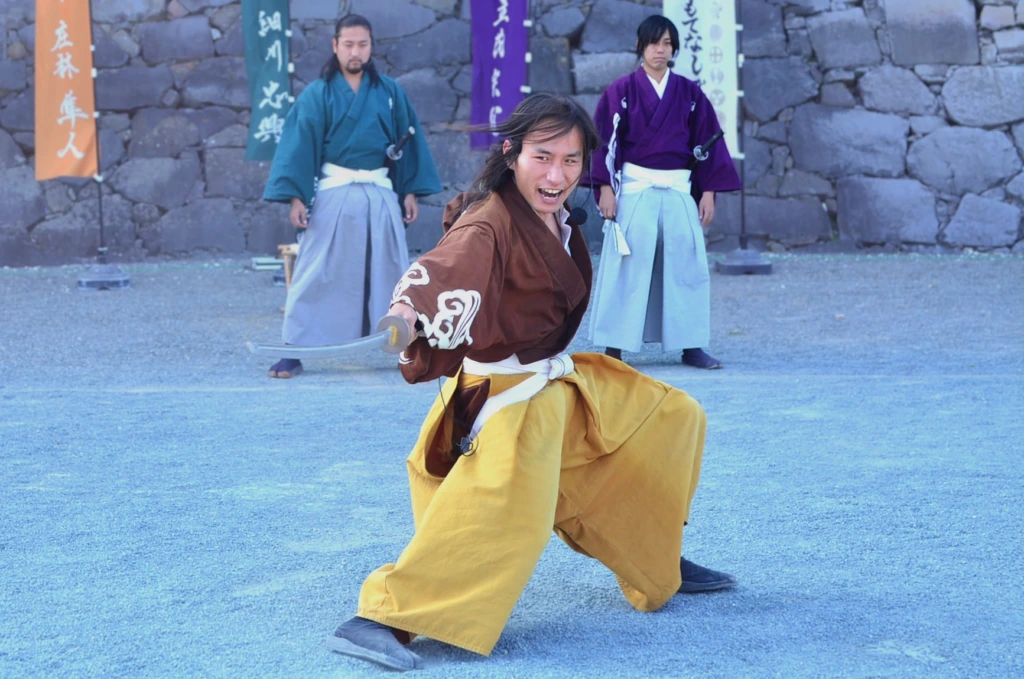
Japan Mangalaxy Orléans 2026

Japan Mangalaxy arrives in Orléans with a weekend dedicated to manga, anime, cosplay, video games, and Japanese culture. This type of event offers an opportunity to explore Japan's influence on contemporary popular culture and brings together a community particularly interested in its characters, stories, and traditions. Although its content is broad, Japanese themes form the core of the event, making it a suitable addition to a broader Japanese culture calendar alongside other events more specialised in martial arts or samurai heritage. The event is included in the France agenda because it offers a way into Japanese culture from a perspective that combines tradition, martial arts, aesthetics and contemporary culture. For visitors, it is also a chance to discover how samurai imagery remains present in Europe and how these cultural expressions relate to collecting and specialist leisure.

Image: Wikimedia Commons – Japanese Martial Art.jpg — Ardour art — CC BY-SA 4.0

Art to Play Nantes 2026

14 – 15 November 2026 Parc des Expositions de la Beaujoire, Nantes

More information ↗
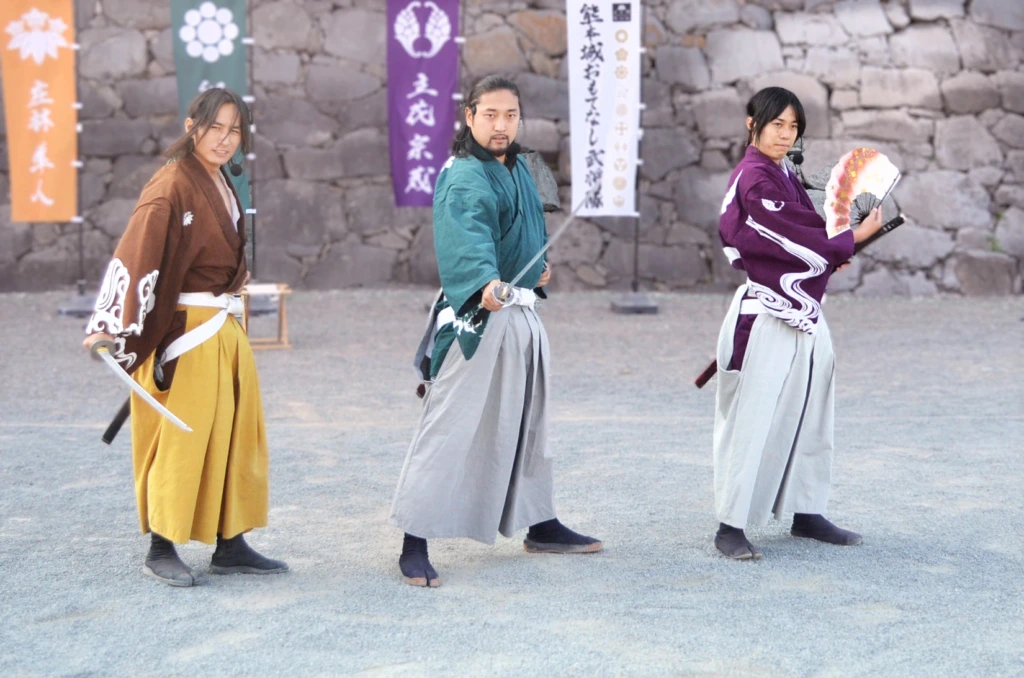
Art to Play Nantes 2026

Art to Play brings together fans of manga, anime, video games, cosplay, and geek culture in Nantes. The event features a variety of activities, guests, performances, and presentations related to Japanese culture and its contemporary expressions. Its relevance to this agenda lies particularly in the connection between traditional Japan and the enormous impact its imagery has on current popular culture. It's an ideal event for manga and anime fans who also want to discover other facets of Japanese culture. The event is included in the France agenda because it offers a way into Japanese culture from a perspective that combines tradition, martial arts, aesthetics and contemporary culture. For visitors, it is also a chance to discover how samurai imagery remains present in Europe and how these cultural expressions relate to collecting and specialist leisure.

Image: Wikimedia Commons – Japanese Martial Artists.jpg — Ardour art — CC BY-SA 4.0

Japanmarkt Lübeck 2026

14 – 15 November 2026 JUNIPER, Lübeck
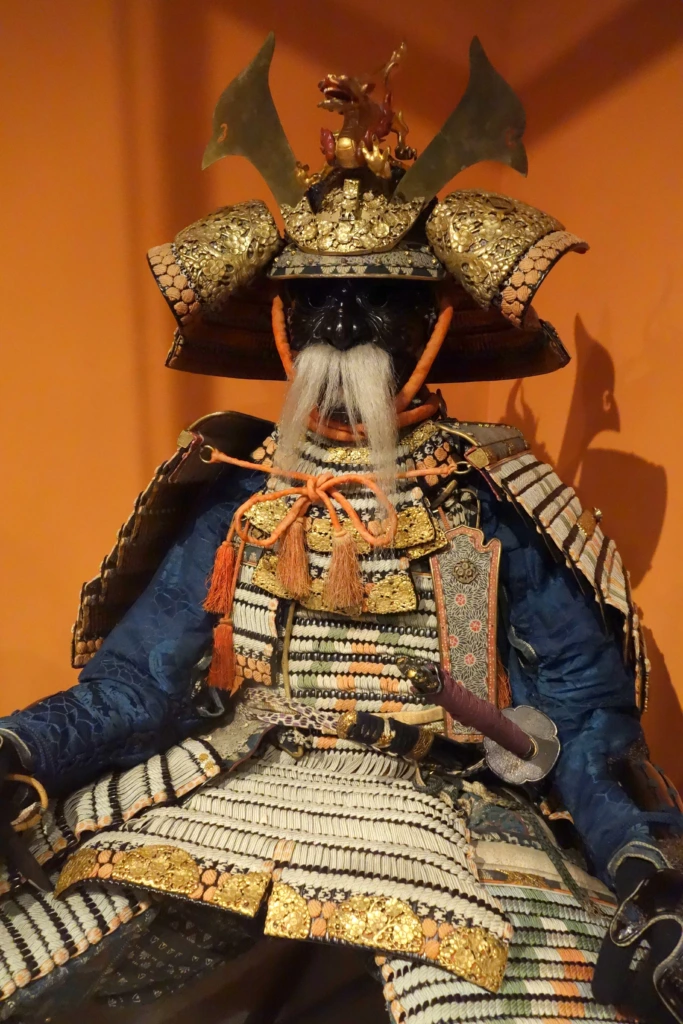
Japanmarkt Lübeck 2026

Japanmarkt Lübeck combines a market, gastronomy, workshops, and cultural activities related to Japan. The programme also includes samurai martial arts demonstrations, which particularly enhances its appeal for a section dedicated to traditional Japanese culture. The event is included in the Germany agenda because it offers a way into Japanese culture from a perspective that combines tradition, martial arts, aesthetics and contemporary culture. For visitors, it is also a chance to discover how samurai imagery remains present in Europe and how these cultural expressions relate to collecting and specialist leisure.

Image: Wikimedia Commons – Samurai armor with Matsumae family crest, Japan, view 2 - Glenbow Museum - DSC00599.JPG — Autor no identificado en la ficha — CC BY-SA 4.0

Japan Weekend Valencia 2026

21 – 22 November 2026 Feria Valencia, Valencia

More information ↗
Japan Weekend Valencia 2026

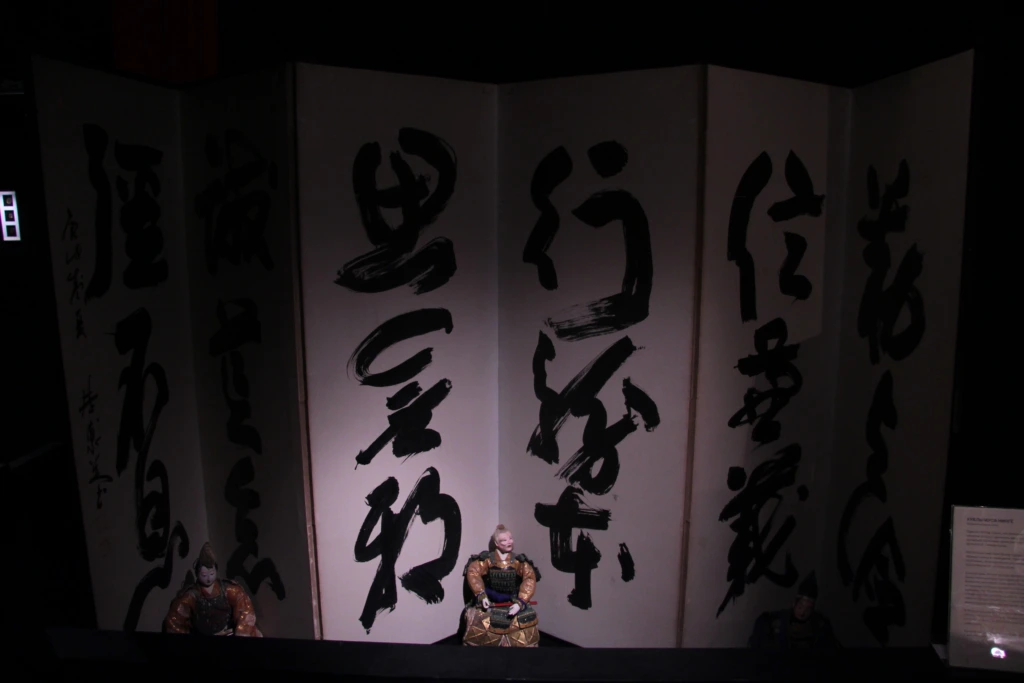
Valencia will host another edition of Japan Weekend, one of the most popular Japanese culture and Asian entertainment events in Spain. Manga, anime, cosplay, video games, and a variety of other activities offer a chance to discover the diversity of Japanese culture and experience the fascination Japan inspires both within and beyond its samurai traditions. The event is included in the Spain agenda because it offers a way into Japanese culture from a perspective that combines tradition, martial arts, aesthetics and contemporary culture. For visitors, it is also a chance to discover how samurai imagery remains present in Europe and how these cultural expressions relate to collecting and specialist leisure.

Image: Wikimedia Commons – "Samurai Art of War" exibition (Выставка "Самураи Art of War") (5911461657).jpg — Mikhail (Vokabre) Shcherbakov — CC BY-SA 2.0

Scroll to Top