Legends & Pop Culture

Swords from books, films, series, anime and video games

Some of the most famous swords never existed: they were born in books, films, series, anime and video games. In this collection you will find replicas inspired by those worlds.

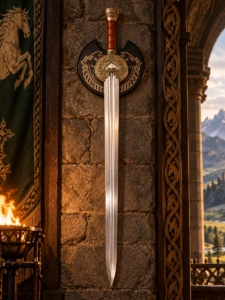
  • Epic fantasy: swords and daggers of elves, dwarves and kings inspired by The Lord of the Rings and The Hobbit, many with a wall plaque.
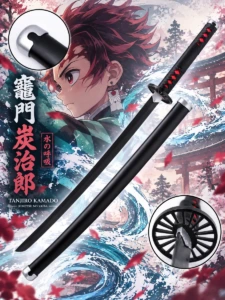
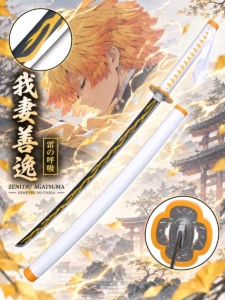
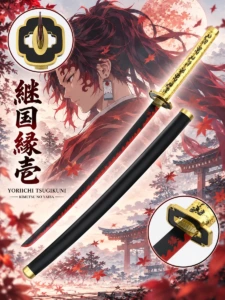
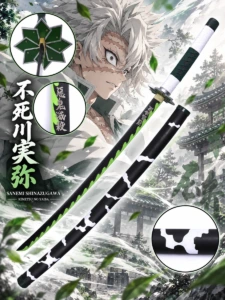
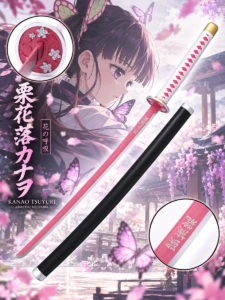
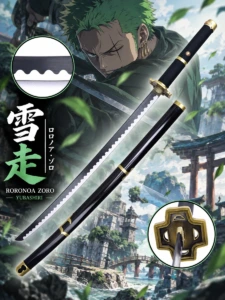
  • Anime: the Nichirin katanas of the Demon Slayer corps and Roronoa Zoro's swords from One Piece.
  • Series, cinema and video games: Game of Thrones, The Witcher, Kill Bill, Assassin's Creed or The Legend of Zelda.

Many replicas are sold unsharpened, made for display and collecting; each product page clearly states whether the piece has an edge, as well as its dimensions and materials.

Did you know that many of these fictional swords are inspired by real swords and legends? We tell you all about it in the History tab.

1. Swords with name and lineage

Imagine a sword that has passed through the hands of a grandfather, a father, and a son. It has seen battles, lost some of its lustre, perhaps even broken at some point. But no one throws it away: it is repaired, reassembled, and continues to be passed down from one generation to the next.

For centuries, a sword could be much more than a weapon. It could be an inheritance. And some even acquired something more special: a name.

In medieval tradition, the swords of great heroes and kings became characters in their own stories. Charlemagne's was Joyeuse, "the joyful one"; Roland's, Durendal; and the Poem of the Cid made Tizona and Colada symbols of their owner's fame and honour. Joyeuse is a particularly curious case: the Louvre houses the sword that was used for centuries in the coronation of the kings of France and which tradition identified as that of the emperor, although the piece we see today incorporates elements from different eras. Even when a sword ceases to be a weapon, it can continue to have a life of its own.

The stories of Northern Europe took this idea even further. In Beowulf, the hero wields swords with names of their own. And in the Völsunga saga, Odin plunges a sword into a tree that only Sigmund manages to pull out. The blade will eventually break in battle, but its fragments are preserved so that, some time later, they can be reforged for his son Sigurd. The new sword will be called Gram, and with it Sigurd will slay the dragon Fáfnir.

The image is powerful: a sword breaks, but its story does not end with it.

Tolkien knew this world very well. He was a professor of Old English at Oxford, studied Beowulf throughout his life, and dedicated years to rewriting the legend of Sigurd. When he created Middle-earth, he took up the idea almost intact: Narsil breaks in the fight against Sauron and, much later, is reforged for Aragorn with a new name, Andúril, the "Flame of the West". The broken sword awaiting its heir reappears, but this time it doesn't herald just any hero. It heralds the return of a king.

Tolkien didn't simply revive stories of swords. He also revived the way ancient cultures imagined their warriors. Rohan is deeply linked to Anglo-Saxon tradition: the names of its characters, its equestrian culture, and even the sound of its language hark back to Old English. Théoden means "king", and Herugrim, the name of his sword, can be translated as "very fierce". His nephew Éomer's sword is called Guthwinë, "friend of battle", and in the films, it has a pommel in the shape of a horse's head.

This is no coincidence. In Anglo-Saxon tradition, even the names of Hengist and Horsa, the legendary chieftains associated with the arrival of the Angles and Saxons in Britain, mean "stallion" and "horse".

And in 1939, archaeology unearthed something that seemed straight off a page of Tolkien. At Sutton Hoo, in Suffolk, a massive Anglo-Saxon burial site from the early 7th century was excavated. Beneath the mound, the impression of a ship some 27 metres long was discovered, and inside, a burial chamber filled with treasures: weapons, jewellery, tableware from distant lands, a famous helmet decorated with warriors and interlaced animals, and a prestigious sword with a richly decorated hilt. We don't know for sure who was buried there, but the assemblage as a whole leaves little doubt about its importance.

That's why, when we see a fantasy sword with a pommel in the shape of a horse, interlaced animals on the guard, or a name of its own, it's worth remembering that almost none of it is modern. The swords of old already had names, belonged to a family, were broken and reforged, and outlived their owners. Tolkien simply had to listen to what was already being said.

2. Elves, dwarves and shadows: design as a language

Before a sword was even drawn, it was already telling a story. Just looking at it was enough.

The shape of the blade, the guard, the pommel, or the decoration could reveal who had made it, where it came from, and even who could afford to carry it. In the Middle Ages, a sword was not just a weapon: it was also a form of identity. The famous Ulfberht swords are a good example. Between the 9th and 11th centuries, numerous blades appeared with that name engraved on the metal; some achieved great prestige, while others are imitations with poorly copied inscriptions. The name had become a recognisable mark of quality. The sword, in a way, spoke.

Tolkien understood this idea very well. When he created Middle-earth, he didn't just invent different peoples: he also gave them their own way of understanding beauty, strength, and war.

In The Hobbit, Gandalf finds two ancient Elven swords, Glamdring and Orcrist, in a troll cave. They had been forged in Gondolin, an Elven city that vanished thousands of years before. Glamdring had belonged to King Turgon; Orcrist was known as the "Goblin-cleaver". The city had fallen and its inhabitants had disappeared, but the weapons remained. It's a very medieval idea: a sword can outlive its owner and become the last piece of a story that no one fully remembers any more.

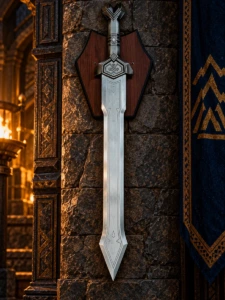
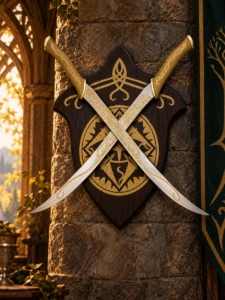
When Peter Jackson brought Middle-earth to the screen, these differences between peoples had to be made visible. The designers couldn't simply say that a sword was Elven or Dwarven: the viewer had to understand it just by looking at it. Elven weapons adopted flowing lines and plant motifs, like Arwen's Hadhafang, with its slightly curved blade, or Legolas's two long knives, whose hilts seem to grow like branches. Dwarven weapons, on the other hand, turned to geometry: angles, straight lines, and solid pieces, like Kíli's short sword, which is reminiscent of architecture carved beneath the mountain. It didn't need explaining. The sword said it all.

Even the names conceal that connection to the ancient world. Many of Tolkien's dwarves, including Fíli, Kíli, and Thorin, and even Gandalf, appear in the catalogue of dwarves in the Völuspá, one of the poems of the Poetic Edda.

For the enemies, the films chose a different language: intimidation. The Witch-king of Angmar, the most fearsome of the Ringwraiths, wields on screen a massive greatsword with a curved guard and a menacing look. However, in the book, his defeat holds a much more interesting idea than any greatsword. Merry carries an ancient blade found in the Barrow-downs, forged centuries earlier by the Men of the North precisely to fight against the power of Angmar. When Merry wounds the Witch-king with it, a forgotten weapon finally fulfils the purpose for which it was created. It's almost as if the past had been waiting.

Real swords also preserved memories long after their maker had passed away: an inscription kept a name alive, a shape revealed a tradition, a decoration identified a people. That's why a fantasy sword deserves a closer look. Behind its curves, angles, and engravings lies a language, and whoever learns to read it discovers the world from which each blade comes before anyone even draws it.

3. Monsters, relics, and legendary steels

There are swords for fighting. And there are others that seem made for something more.

In the old European stories, some swords held relics, were linked to saints, or could only be wielded by the one who proved to be the chosen one. Modern fantasy turned this idea into a classic, but the seed was already planted in the Middle Ages. In the Song of Roland, the hero lists the relics he keeps in Durendal's pommel: objects associated with Saint Peter, Saint Basil, Saint Denis, and the Virgin Mary. The sword ceases to be just a weapon and becomes a sacred object.

There is another image that almost everyone knows: a sword stuck in a stone, waiting for the person destined to wield it. At the end of the 12th century, the works of Robert de Boron helped to establish the tradition of the sword that proves Arthur's legitimacy. And there is something even more surprising: in the chapel of Montesiepi, in Tuscany, a sword is preserved embedded in the rock, which tradition attributes to Saint Galgano, a knight who, according to legend, gave up arms and plunged his sword into the stone around 1180. He didn't pull it from the rock to begin an adventure; he stuck it in to end a life of war.

Many centuries later, the same image reappeared in The Legend of Zelda, the series Nintendo launched in 1986: the Master Sword, a sacred weapon that repels evil, rests on a pedestal awaiting a pure-hearted hero. The story had changed, but the image remained recognisable.

And if a sword could be sacred, it could also become a weapon against that which men feared. European folklore abounds with beliefs about materials capable of protecting against the supernatural. In the British Isles, it was said that iron scared away fairies, and that is why horseshoes were hung above doors. Silver, the metal of the moon and of purity, became associated with something even more powerful: harming creatures like werewolves. From this came one of the most famous weapons in fiction, the silver bullet. And from this also largely stems one of the best-known traits of Geralt of Rivia, the witcher created by Andrzej Sapkowski: a steel sword for men and a silver one for beasts. The enemy determines the weapon.

However, Geralt carries his swords on his back, and here fiction takes a liberty: a longsword is not easily drawn from that position, and in the Middle Ages it was almost always worn at the belt.

Finally, there is a type of legendary sword that needs no magic. It only needs metal. For centuries, blades from the Near East were famous in Europe for their wavy surface, like flowing water, and for an edge that seemed never to wear down: the so-called Damascus steel. The name is somewhat misleading. The authentic Damascus steel was made from crucible steel, wootz, produced in southern India and traded in ingots, and has nothing to do with the blades forged today by welding layers of steel together to create a similar pattern. When the original technique was lost, around the 18th century, Damascus blades went from being a product to a legend.

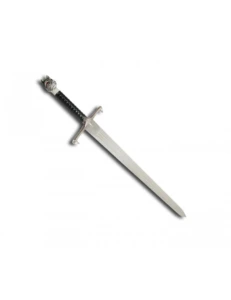
George R. R. Martin took that image and transformed it into the Valyrian steel of A Song of Ice and Fire: a metal of legendary hardness, recognisable by its ripples, whose secret was lost with ancient Valyria. In Westeros, such a sword is worth more than a castle. Longclaw, the ancestral sword of House Mormont, comes into Jon Snow's hands with a new pommel in the shape of a direwolf, and what he receives is not just a blade: it is antiquity, prestige, and knowledge that no one knows how to reproduce any more.

Relics, stones, silver, and lost steels. Fantasy has taken them further, but they were all already in the stories that were told eight hundred years ago.

4. Coats of arms, crusades and houses at war

Imagine entering a medieval castle. You don't know any of the men there. They wear armour, helmets, and swords, and their faces may be completely hidden. But you don't need to ask who they are: just look at their shields.

A lion. An eagle. A cross.

As helmets increasingly covered the knight's face, painted shields acquired a fundamental function: allowing a warrior to be recognised in the heat of battle. Over time, these symbols were transferred to clothing, horses, and banners, giving rise to a complete system, with its colours, rules, and specialists, the heralds: heraldry. Behind each symbol was a family, a lineage, and a story. And when these families settled in their castles, the shields also adorned the walls: crossed swords above the house's coat of arms, hung in the hall to remind everyone who entered to whom that place belonged.

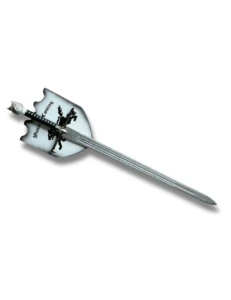
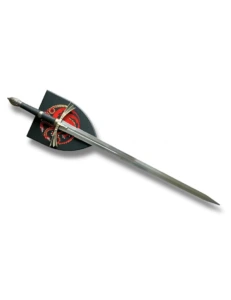
Centuries later, George R. R. Martin used that same idea to construct the great houses of A Song of Ice and Fire. The Starks have their grey direwolf on a white background and the motto "Winter is Coming." The Targaryens, their three-headed red dragon on a black background. Each house has colours, symbols, and a motto that allow it to be recognised even before knowing who is behind the armour.

It is no coincidence that all this is reminiscent of English history. Between 1455 and 1487, the houses of York and Lancaster clashed in a long struggle for the throne, and their most famous emblems ended up being two roses: the white rose of York and the red rose of Lancaster. When Henry VII came to power and married a York heiress, the union was represented by a new image, the Tudor rose. Martin acknowledged the Wars of the Roses as one of his great sources of inspiration.

But in the Middle Ages, symbols did not only identify families. They also accompanied the men who marched to war, and no war saw more embroidered crosses than the Crusades.

In 1187, Saladin recaptured Jerusalem, and a few years later the Third Crusade began, with Richard the Lionheart among its protagonists. In that world of crusaders and fortresses, another group emerged that centuries later would have an enormous presence in popular culture: the Nizari. They controlled castles in mountainous areas of Persia and Syria, such as Alamut and Masyaf, and were feared for a very specific strategy: the targeted assassination of enemy leaders. One of their most famous leaders was Rashid al-Din Sinan, whom the crusaders called the "Old Man of the Mountain." In 1192, two men connected to their organisation killed in Tyre Conrad of Montferrat, who had just been elected King of Jerusalem.

Over time, stories far more extraordinary than the facts grew up around the Nizari: drugs, secret gardens, and men willing to die blindly obeying their master. Today, historians consider many of those accounts exaggerations or propaganda from their enemies. But the legend survived. In 1938, the Slovenian writer Vladimir Bartol published Alamut, a novel inspired by that world, and decades later that image reached video games: Assassin's Creed set its first adventure in the Holy Land of 1191, and its protagonist, Altaïr, travels through Acre, Damascus, and Jerusalem with a sword with a winged guard at his belt, blending historical figures with a fictional plot.

A shield was never simply a shield. It was a way of saying, "This is my house, this is my lineage." That is why, eight centuries later, hanging a sword above a coat of arms still means the same thing as it did in the hall of that castle.

5. Swords in Secret: Japan in the Taishō Era

There's an image that seems strange if you know the history of samurai Japan. A swordsman walks through a modern city, among trams, newspapers, cafés, and men dressed in Western clothing. And he carries a sword that, according to the law, shouldn't be there.

It's one of the most characteristic images of Demon Slayer (Kimetsu no Yaiba, 鬼滅の刃). The story of demons and slayers belongs to the realm of fantasy, but the world in which it takes place has a very specific historical basis: the Taishō era (大正時代), between 1912 and 1926. And to understand why those swords had to be hidden, we have to go back a few decades.

In 1876, the Meiji government (明治) enacted the Haitōrei (廃刀令), an edict that prohibited carrying swords in public. For the former samurai, this meant much more than losing a weapon: the most visible symbol of their social standing was disappearing from the streets. Many did not accept it. In 1877, the Satsuma Rebellion (西南戦争) broke out, led by Saigō Takamori (西郷隆盛), and the new imperial army, armed with modern rifles, had to face men who still fought with swords. Japan was entering the future, but it carried the past with it.

The sword did not disappear; it changed its place. In the following decades, the old fighting traditions began to be organised, and in 1895 the Dai Nippon Butoku Kai (大日本武徳会) was founded, which played a key role in the preservation and organisation of Japanese martial arts. The sword moved from the battlefield to the dōjō (道場), to ceremonies, and to collections. And sometimes, to objects designed to conceal it: shikomizue (仕込み杖) were walking sticks that hid a blade inside.

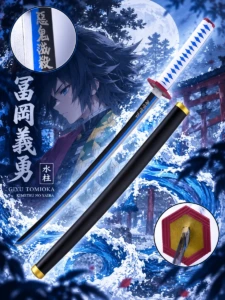
When the Taishō era arrived, Japan was a land of contrasts. Western clothing coexisted with kimonos, modern cities with temples, and the sword arts continued to be passed down. This is the Japan that Demon Slayer chooses as the setting for Tanjirō and the Demon Slayer Corps. Fiction adds something that never existed—demons—and swords, the Nichirin (日輪刀), that change colour depending on who wields them. But many of the things its swordsmen do echo real tradition.

In Japan, swordsmanship was transmitted within schools or ryūha (流派), where students learned techniques through forms or kata (型), and each school had its own style and secrets. Some became famous for a specific trait: the Jigen-ryū (示現流) of Satsuma taught how to decide a fight with a single devastating blow, and the iai (居合) tradition was based on drawing and cutting in the same movement. When Zenitsu draws and cuts in a single flash, or when each Hashira masters their own "breathing" learned from a master, the series is bringing something very real into the realm of fantasy: the master didn't just teach how to handle a sword, they transmitted an entire school.

Even the parts of the sword could have a family history. The tsuba (鍔), the guard that protects the hand, could be disassembled and kept to be mounted on another blade. Thus, a part of an ancestor's sword could accompany someone who wasn't even born when it was forged. In the series, Tanjirō mounts Kyōjurō Rengoku's flame-shaped guard on his sword after his death: a fictional gesture that any samurai family would have understood. Some guard shapes, like the four-lobed mokkō (木瓜), were repeated for centuries precisely because of this custom of preserving and reusing.

The sword had ceased to dominate the battlefields, but it remained alive in dōjō, in collections, and in family traditions. Demon Slayer only had to imagine what would happen if, in that Japan trying to leave its past behind, someone still needed a real sword.

Fantasy invented the demons. History provided the swords.

6. Cursed swords, famous swords

Some swords have names. And some swords have names that are enough to tell a story.

In Japan, the most famous blades were given the title meitō (名刀), "celebrated swords." Their prestige could stem from their age, their beauty, their smith, or the stories that had survived around them. One of the best known is Dōjigiri Yasutsuna (童子切安綱): according to tradition, this sword from the Heian period (平安時代, 794-1185) was the one used by the warrior Minamoto no Yorimitsu (源頼光) to kill the demon Shuten-dōji (酒呑童子). Over time, it became part of the Tenka Goken (天下五剣), the "Five Swords Under Heaven," the most celebrated group of blades in Japan.

But if any Japanese sword is associated with the idea of a curse, it is the Muramasa (村正). Muramasa was a real swordsmith, active in Ise Province (伊勢国) in the 16th century, whose blades had an extraordinary reputation. The problem was that his name became linked to several episodes in which members of the Tokugawa (徳川) family were injured or killed. When the Tokugawa ruled Japan, the belief spread that these swords brought them misfortune, and many owners preferred to erase the signature.

The legend also needed an opposing sword, and it found it in Masamune (正宗), the most illustrious name in Japanese swordsmithing. In the most well-known version, both blades are plunged into a stream: Muramasa's blade cuts all the tree leaves that the current carries towards it; before Masamune's blade, however, the leaves pass by unharmed, because it only cuts what it should. It is a beautiful story, and also impossible: the two masters did not live at the same time. But it summarises an idea that has endured to this day: the bloodthirsty sword versus the just sword.

In the Edo period (江戸時代, 1603-1868), moreover, swords began to be evaluated by something very specific: their cutting ability. In 1797, the Kaihō Kenjaku (懐宝剣尺) was published, a work that classified swordsmiths into grades according to the sharpness of their blades: saijō ō-wazamono (最上大業物), the supreme ones; then came ō-wazamono (大業物), ryō-wazamono (良業物), and wazamono (業物). Among the most highly regarded is a name very familiar to fans: Nagasone Kotetsu (長曽祢虎徹). His blades were so coveted that forgeries circulated in droves, to the point that a saying arose: if you see a Kotetsu, assume it's fake.

Exactly two centuries after that classification, in 1997, Eiichirō Oda began publishing One Piece (ワンピース), and brought all these ideas into his world. His swords are also ordered by grades. The Sandai Kitetsu (三代鬼徹), with a name reminiscent of Kotetsu, is a cursed sword that only accepts those who dare to challenge it. The Wadō Ichimonji (和道一文字), Zoro's most beloved sword, is named after the Ichimonji (一文字), a real school of swordsmiths active since the Kamakura period (鎌倉時代, 1185-1333). The Yubashiri (雪走), "the one that runs over the snow," and the Shūsui (秋水), "autumn water," follow the Japanese custom of giving fine blades poetic names. And the Enma (閻魔) is named after the king of the Buddhist underworld. Names, grades, curses: the entire tradition, in the hands of a pirate swordsman.

The most curious case, however, is that of Hattori Hanzō (服部半蔵). In Kill Bill, Quentin Tarantino portrays him as a legendary retired swordsmith in Okinawa who breaks his oath never to forge again in order to give a sword to the protagonist. The historical Hattori Hanzō was quite different. Hattori Hanzō Masanari (服部正成, 1542-1596) was a samurai in the service of Tokugawa Ieyasu (徳川家康), known as "Oni Hanzō" (鬼半蔵), "Hanzō the Demon," who helped his lord escape after the death of Oda Nobunaga (織田信長) in 1582. One of the gates of the Imperial Palace in Tokyo still bears his name. He wasn't a swordsmith, but the Hanzō in the film didn't appear out of nowhere either: the actor who plays him, Sonny Chiba, had already portrayed Hattori Hanzō in the 1980 Japanese series Kage no Gundan (影の軍団). One legend feeding another.

Cursed or celebrated, counterfeit or turned into a character, each of these swords has something in common: its fame weighs as much as its steel. In Japan, a blade has never been just what it cuts. It's also what is said about it.

In Peter Jackson's The Lord of the Rings, elven weapons have flowing lines: the grips of Legolas's long knives seem to grow like branches.

In the Song of Roland, Durendal's pommel holds relics of Saint Peter, Saint Basil, Saint Denis and the Virgin Mary.

Narsil breaks in the fight against Sauron and, much later, is reforged for Aragorn under a new name: Andúril, the "Flame of the West".

The Master Sword in The Legend of Zelda, created by Nintendo in 1986, waits on a pedestal for a pure-hearted hero, like Arthur's sword in the stone.

As helmets covered more of the face, painted shields became vital for recognising each knight in battle. That's how heraldry was born.

The Nizaris held castles in the mountains of Persia and Syria, such as Alamut and Masyaf, and were feared for the targeted killing of enemy leaders.

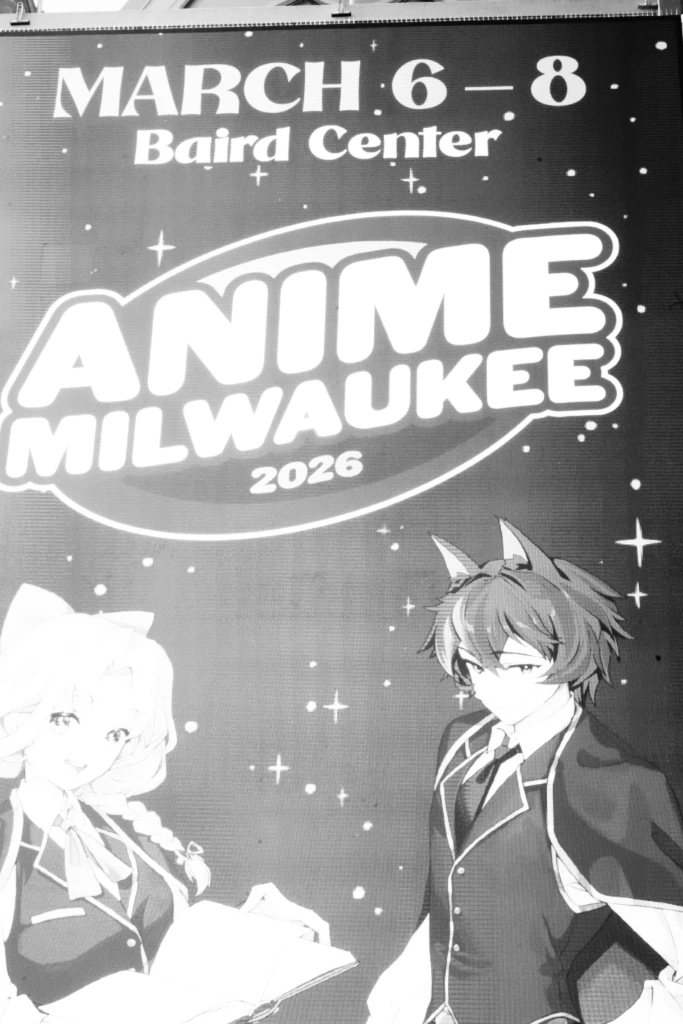
Heroes World 2026

17 – 18 October 2026 Brussels Expo, Bruselas

More information ↗
Heroes World 2026

Heroes World brings together film, television series, comics, video games, cosplay, and geek culture in a single festival. The event also includes a Made in Asia zone, reinforcing the presence of manga, anime, and Japanese culture within a broader entertainment framework. As part of Belgium's cultural calendar, the event provides a comprehensive overview of contemporary entertainment and collectibles. The presence of characters, artists, video games, manga, anime, fantasy, and science fiction helps connect popular culture with the interests of a diverse audience and offers a meeting point for fans of different generations.

Image: Wikimedia Commons – Anime Milwaukee 030826.jpg — LaShawnda Jones — CC BY-SA 4.0

MEX Berlin 2026

23 – 25 October 2026 Messegelände Berlin ExpoCenter City, Berlín

More information ↗
MEX Berlin 2026

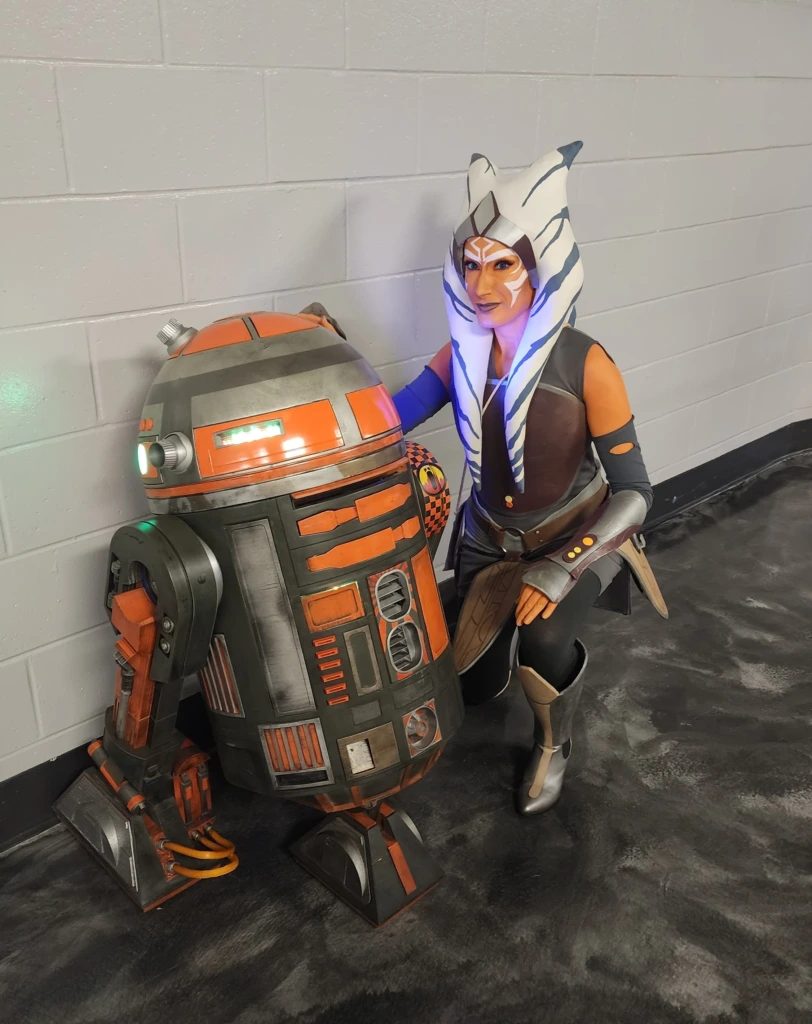
Manga & Entertainment Expo Berlin combines anime, manga, gaming, fantasy, cosplay, and Japanese pop culture. The programme includes workshops, artists, and entertainment, making the expo a key event for pop culture fans and collectors. Within Germany's cultural calendar, the event provides a comprehensive overview of contemporary entertainment and collecting. The presence of characters, artists, video games, manga, anime, fantasy, and science fiction helps connect popular culture with the interests of a diverse audience and offers a meeting point for fans of different generations.

Image: Wikimedia Commons – Ahsoka Tano Rebels Cosplay.jpg — FanBoyBBY36 — CC0 1.0

Lucca Comics & Games 2026

28 October 2026 – 1 November 2026 Lucca, sedes repartidas por el centro histórico

More information ↗
Lucca Comics & Games 2026

The 60th edition of Lucca Comics & Games will bring together comics, games, video games, animation, fantasy, and Japanese culture. The festival occupies various venues throughout the city and features dedicated areas for Japan and cosplay, as well as a strong international presence of authors and artists. A key event on Italy's cultural calendar, the festival offers a broad perspective on contemporary entertainment and collectibles. The presence of characters, artists, video games, manga, anime, fantasy, and science fiction helps connect popular culture with the interests of a diverse audience and provides a meeting point for fans of different generations.

Image: Wikimedia Commons – 500px photo (64949933).jpeg — Alexandre Bucquet — CC BY 3.0

Barbate Halloween Market 2026

29 October 2026 – 1 November 2026 Barbate, Cádiz

More information ↗
Barbate Halloween Market 2026

Barbate celebrates a Halloween-themed market featuring crafts, entertainment, food, and an atmosphere inspired by fantasy and horror. A unique addition to the autumn calendar, it's especially suited to the realm of legends, fantasy, and popular culture. Within Spain's cultural scene, the event offers a broad perspective on contemporary entertainment and collectibles. The presence of characters, artists, video games, manga, anime, fantasy, and science fiction helps connect popular culture with the interests of a diverse audience and provides a meeting point for fans of different generations.

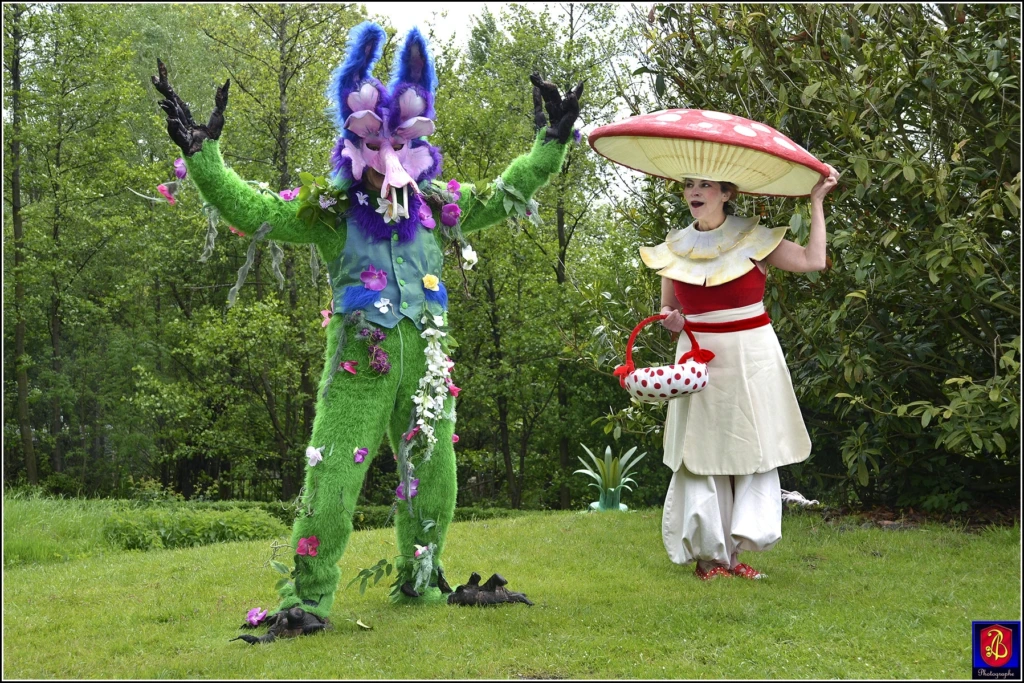
Image: Wikimedia Commons – 20140119123158IMG 5917 - Yukicon 2014 - matiast1.jpg — Matias Tukiainen — CC BY 2.0

TGS Pau Anime Game Show 2026

31 October 2026 – 1 November 2026 Parc des Expositions, Pau

TGS Pau Anime Game Show 2026

TGS Pau Anime Game Show brings together anime, manga, video games, cosplay, and geek culture in an event dedicated to the great universes of fiction. The fair offers activities and events for fans of Japanese culture and contemporary entertainment, as well as content related to film, television series, and gaming. Its cross-disciplinary nature makes it a great event for the Legends & Pop Culture section, especially for those who combine an interest in manga with collecting and fantasy. Within the French events calendar, the event provides a broad reference point for contemporary entertainment and collecting. The presence of characters, artists, video games, manga, anime, fantasy, and science fiction helps connect popular culture with the interests of a very diverse audience and offers a meeting point for fans of different generations.
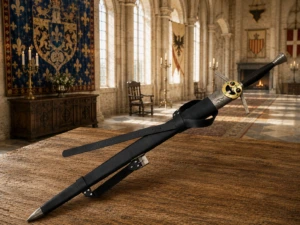
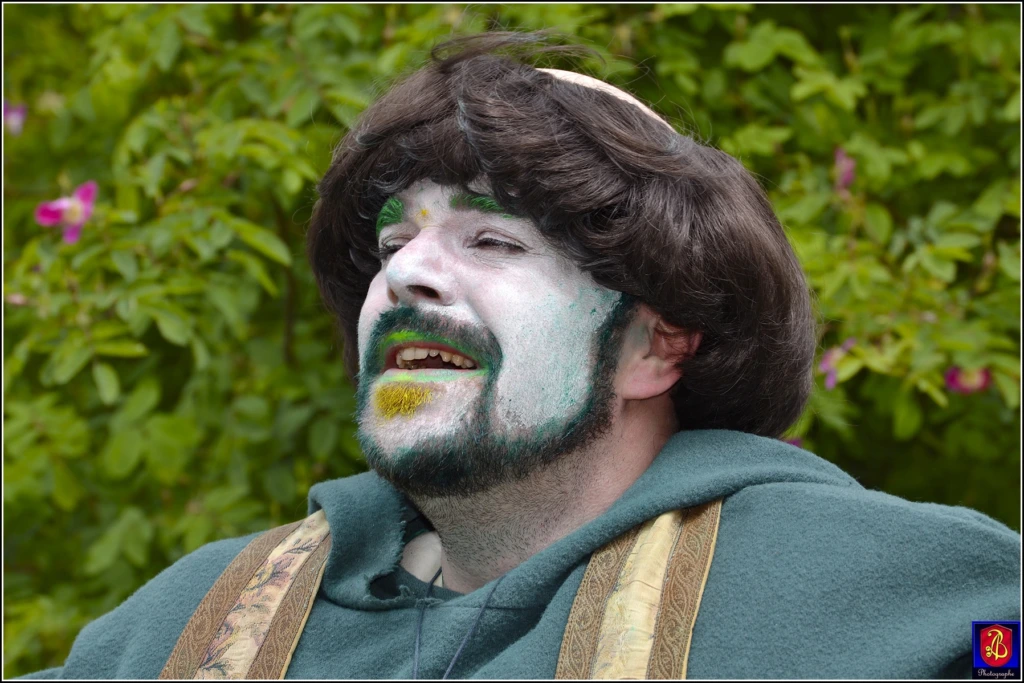
Image: Wikimedia Commons – 500px photo (64949919).jpeg — Alexandre Bucquet — CC BY 3.0

FACTS – Belgian Comic Con 2026

31 October 2026 – 1 November 2026 Flanders Expo, Gante

More information ↗
FACTS – Belgian Comic Con 2026

FACTS is one of Belgium's major pop culture conventions, bringing together film, TV series, comics, video games, manga, cosplay, and collectibles. Its vast array of fictional universes makes it a key event for the Legends & Pop Culture category. Within Belgium's cultural calendar, the event provides a comprehensive overview of contemporary entertainment and collectibles. The presence of characters, artists, video games, manga, anime, fantasy, and science fiction helps connect popular culture with the interests of a diverse audience and offers a meeting point for fans of different generations.
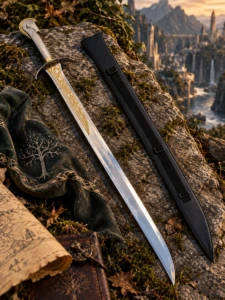
Image: Wikimedia Commons – Aliens cosplay.jpg — Upload Guy — CC0 1.0

Comic Con Kids 2026

31 October 2026 – 1 November 2026 Pavilhão Multiusos, Guimarães

More information ↗
Comic Con Kids 2026

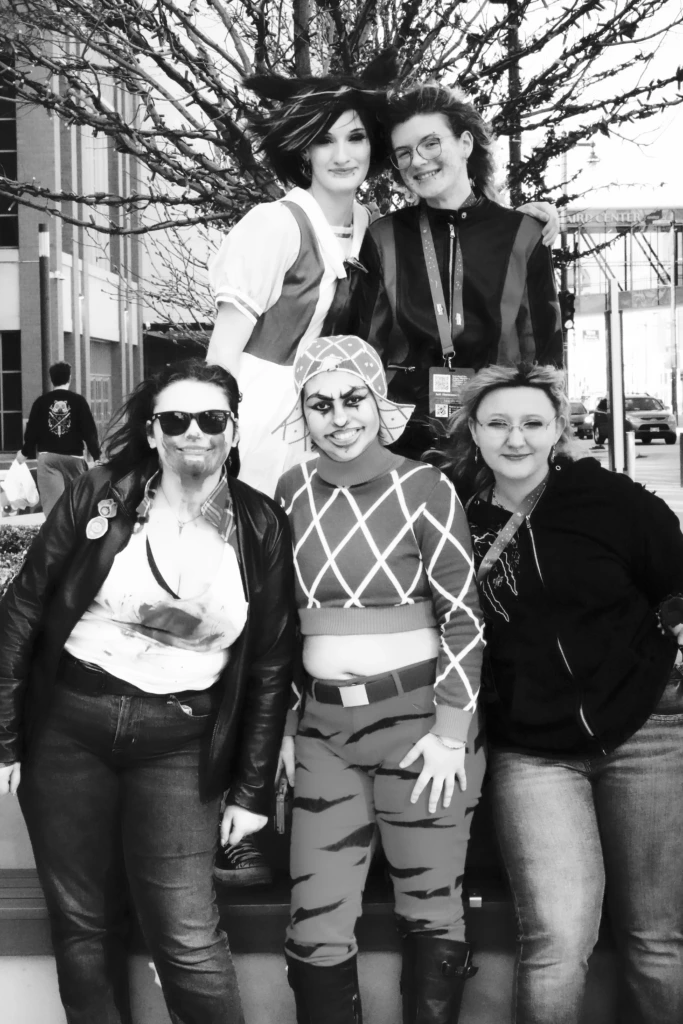
Comic Con Kids is geared towards families and children, and in 2026 it will feature a special Halloween edition. The programme combines characters, fantasy, monsters, heroes, and pop culture in a format accessible to younger audiences. Within Portugal's cultural calendar, the event offers a broad perspective on contemporary entertainment and collectibles. The presence of characters, artists, video games, manga, anime, fantasy, and science fiction helps connect popular culture with the interests of a diverse audience and provides a meeting point for fans of different generations.

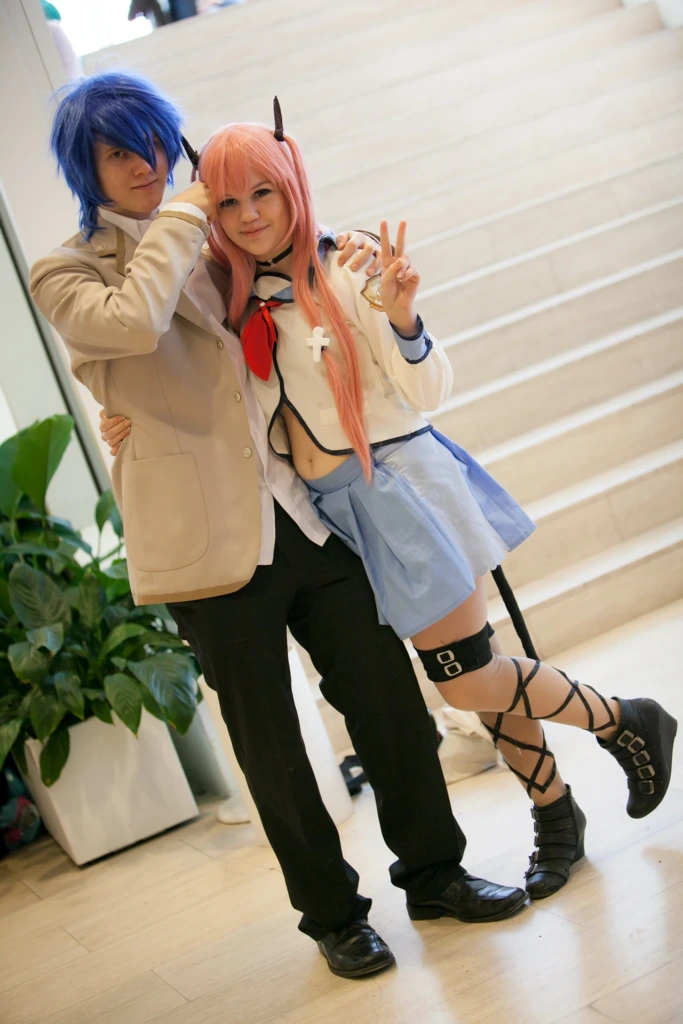
Image: Wikimedia Commons – Anime MKE 030826, Friend Group 1.jpg — LaShawnda Jones — CC BY-SA 4.0

Lisboa Games Week 2026

19 – 22 November 2026 FIL – Parque das Nações, Lisboa

More information ↗
Lisboa Games Week 2026

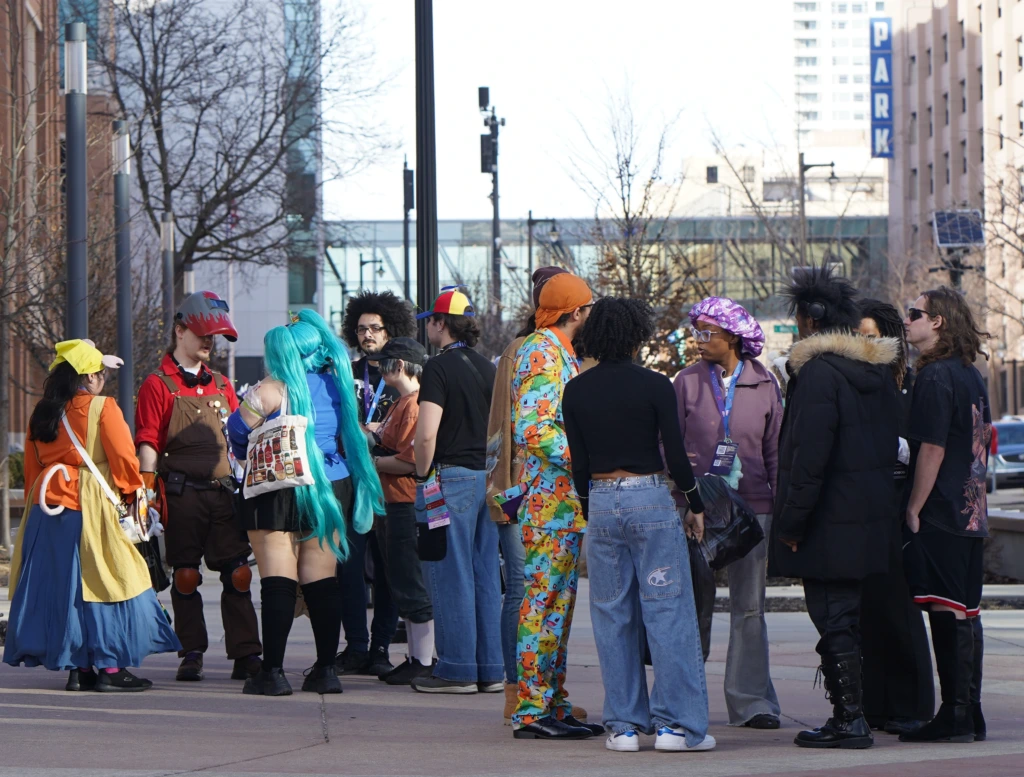
Lisboa Games Week brings together video games, esports, technology, and digital entertainment, along with cosplay competitions and numerous activities for fans. Its scale and blend of gaming, geek culture, and cosplay make it a key event in Portuguese pop culture. Within Portugal's cultural calendar, the event offers a broad perspective on contemporary entertainment and collecting. The presence of characters, artists, video games, manga, anime, fantasy, and science fiction helps connect popular culture with the interests of a diverse audience and provides a meeting point for fans of different generations.

Image: Wikimedia Commons – Anime Milwaukee crowd 030826.jpg — LaShawnda Jones — CC BY-SA 4.0

Durango Fantasy Market 2026

20 – 22 November 2026 Durango, Bizkaia
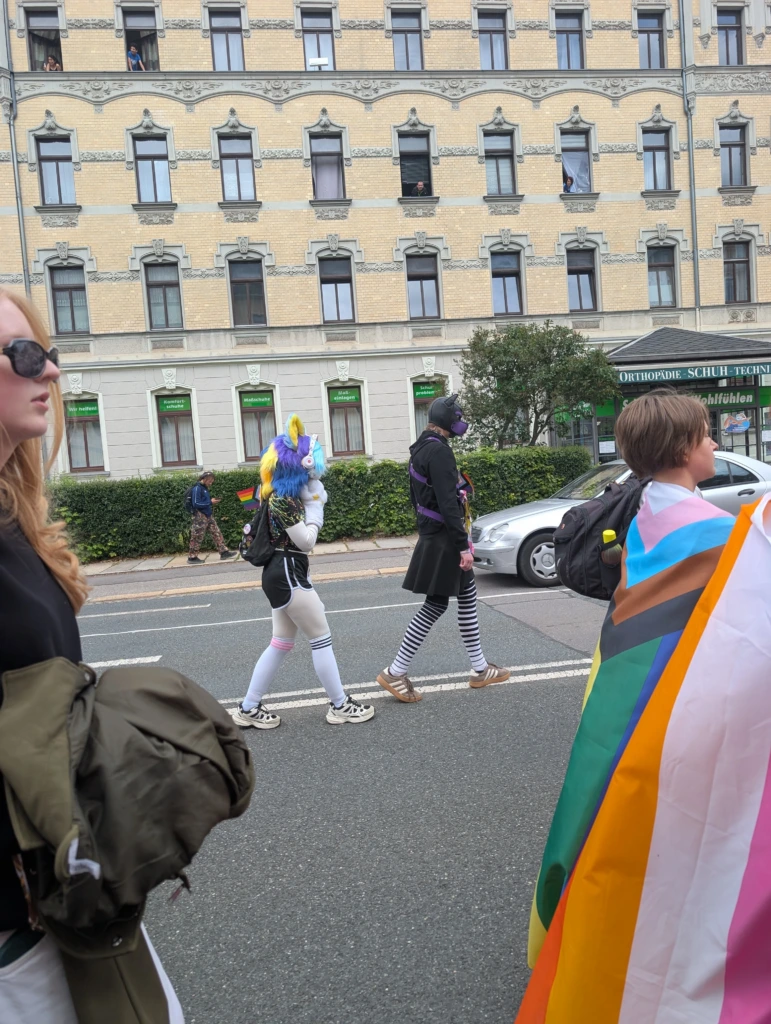
Durango Fantasy Market 2026

Durango will transform into a fantasy world for a weekend, filled with crafts, music, fantastical characters, and activities for all ages. This event is designed for those who enjoy imaginary worlds, fantasy, and themed environments, closely resembling the universe of legends and pop culture. Within the Spain agenda, the event offers a broad perspective on contemporary entertainment and collectibles. The presence of characters, artists, video games, manga, anime, fantasy, and science fiction helps connect popular culture with the interests of a diverse audience and provides a meeting point for fans of different generations.

Image: Wikimedia Commons – 02-CSD Chemnitz 2026.jpg — Elmschrat — CC BY 4.0

Games&Co – Pordenone Fair

21 – 22 November 2026 Fiera di Pordenone, Pordenone

More information ↗
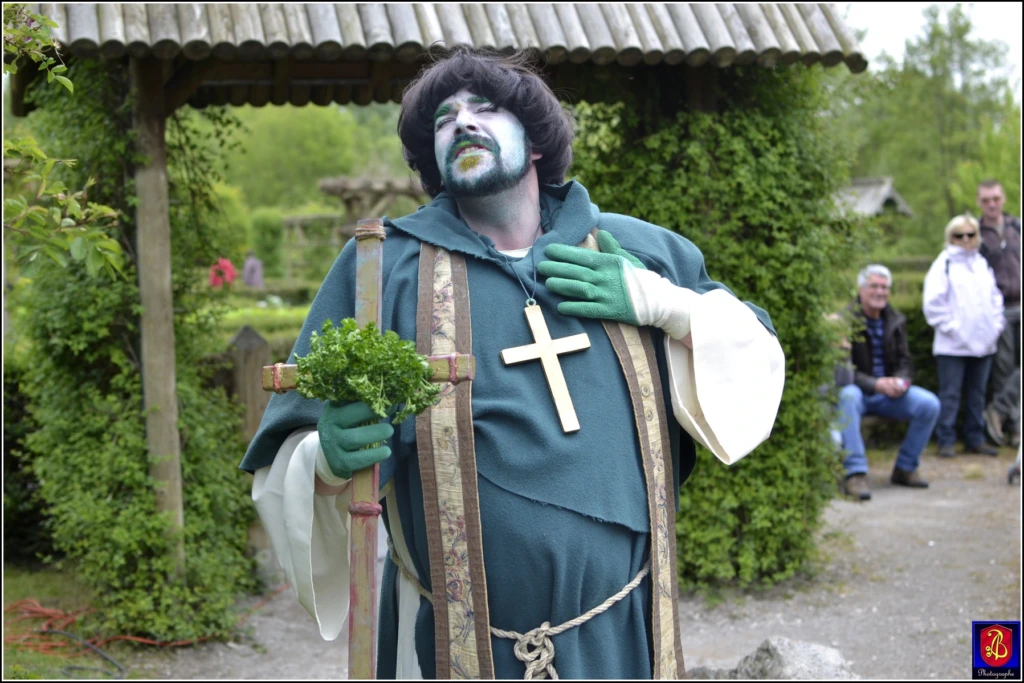
Games&Co – Pordenone Fair

Games&Co is part of the Fiera del Radioamatore 2 and brings together video games, comics, fantasy, games, and cosplay. It's a broader event, but it fits well into a pop culture and collectibles calendar thanks to its combination of entertainment, fandom, and geek culture. Within Italy's cultural scene, the event provides a comprehensive overview of contemporary entertainment and collectibles. The presence of characters, artists, video games, manga, anime, fantasy, and science fiction helps connect popular culture with the interests of a diverse audience and offers a meeting point for fans of different generations.

Image: Wikimedia Commons – 500px photo (64949985).jpeg — Alexandre Bucquet — CC BY 3.0

Scroll to Top