


In 1588, Toyotomi Hideyoshi (豊臣秀吉) ordered the so-called "sword hunt", the katanagari (刀狩り). This measure aimed to disarm peasants and other groups not belonging to the warrior class, as part of a broader process of social and political reorganisation. Decades later, during the Tokugawa shogunate and the Edo period (江戸時代, 1603-1868), the use of two swords became closely associated with the status of the samurai. This pair was called daishō (大小), literally "big and small", and became one of the most recognisable symbols of the warrior class.
The long sword was the katana (刀), while the short one was the wakizashi (脇差). During the Edo period, both swords were worn tucked into the obi, with the edge facing upwards. The shorter wakizashi was especially practical in confined spaces, where a long sword could be cumbersome. The Cerralbo Museum, for example, describes its own wakizashi as a weapon used in close-quarters combat, for example, indoors.
But the wakizashi also had another distinctive feature: it could accompany the samurai in situations where the katana had to be left outside. Sources from the British Museum indicate that the wakizashi was carried both indoors and outdoors when the katana was also carried. In certain formal situations, the long sword could be left at the entrance while the short one remained with its owner. In this way, the wakizashi was not simply a "second sword", but a piece that retained practical utility and social presence even inside buildings.
The wakizashi could also play a role in seppuku (切腹), the ritual suicide historically associated with certain members of the samurai class. The Cerralbo Museum records precisely this use, along with its function in close-quarters combat. The tantō (短刀), an even shorter blade, could also be used in certain contexts and, in certain periods, as part of combinations with a long sword.
It is important, however, to distinguish between the three categories frequently found in modern collections and catalogues: the katana is the long sword, the wakizashi is a short sword, and the tantō is a short, dagger-like blade. The fact that a collection includes a katana, a wakizashi, and a tantō with the same decoration or within the same design family does not mean that they historically constitute a three-piece "daishō". The term daishō specifically refers to the pair of long and short swords associated with samurai status, especially during the Edo period.
And here an important difference emerges between "carrying two swords" and forming a true daishō. The idea of the set wasn't necessarily limited to the two blades having exactly the same origin. The defining characteristic was the conception of them as a pair: katana and wakizashi could share the same aesthetic in their mounts, with coordinated motifs, materials, and decorative elements. The Metropolitan Museum holds several examples of daishō and expressly notes the care taken to match their appearance.
In fact, the pieces preserved in museums show that a pair could have a much more complex history. In one of the daishō at the Metropolitan Museum, for example, the katana blade dates from the 16th century, while the wakizashi blade is from the late 14th or early 15th century; the mounts that make them a set are from the 19th century. In another daishō preserved by the same museum, the katana blade dates from 1636, the work of Tadahiro (second generation), and the wakizashi blade dates from the early 17th century, by the smith Masatoshi; again, the mount joining both pieces is later, from the late 18th or early 19th century. This demonstrates that a daishō should not necessarily be imagined as two blades made simultaneously by the same master.
During the Edo period, moreover, the sword gradually took on a dimension that went far beyond its function as a weapon. The long period of peace meant that the mounts, guards, pommels, ornaments, and scabbards acquired enormous aesthetic importance. The Metropolitan Museum itself describes the elements of the mount as true works of art and explains that they could be disassembled, replaced, and adapted to different occasions.
Therefore, when we see a katana and a wakizashi presented as a pair today, the idea of the daishō should not be understood simply as "a large sword and a small one". It is a concept that unites function, status, tradition, and aesthetics: two weapons of different sizes designed to form a recognisable set.
This same logic helps to understand many modern product families that feature a katana, a wakizashi, and a tantō with a common aesthetic. They are related formats that allow for the presentation of the same design line in different sizes, but they should not be automatically confused with a historical daishō.
The next time we see a katana next to a wakizashi, we can look beyond their dimensions. We can ask ourselves if they share a mount, if their designs are coordinated, what era they represent, and how they relate to one another. Because in a true daishō set, the two swords don't tell exactly the same story: they tell it together.
Pieces from this story
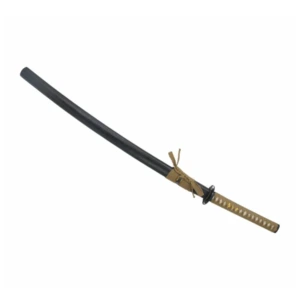 Japanese Forged 1050 Katana in Brown
150,00 €
Japanese Forged 1050 Katana in Brown
150,00 €
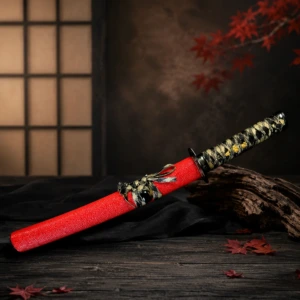 Japanese Tantō Red Cherry Blossom (Sakura) – 1045 Steel
150,00 €
Japanese Tantō Red Cherry Blossom (Sakura) – 1045 Steel
150,00 €
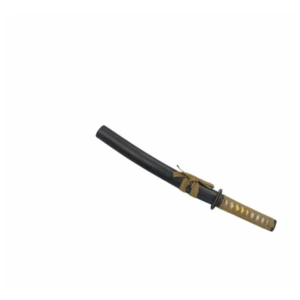 Japanese Forged 1050 Tantō in Brown
120,00 €
Japanese Forged 1050 Tantō in Brown
120,00 €
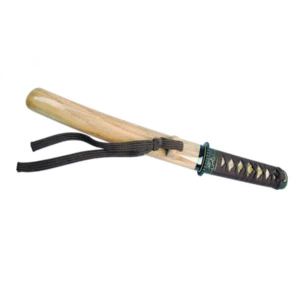 Japanese Maru Tantō in Natural Wood
120,00 €
Japanese Maru Tantō in Natural Wood
120,00 €
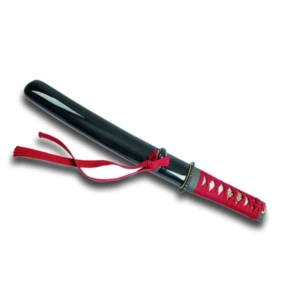 Japanese Maru Tantō with Red Handle
120,00 €
Japanese Maru Tantō with Red Handle
120,00 €
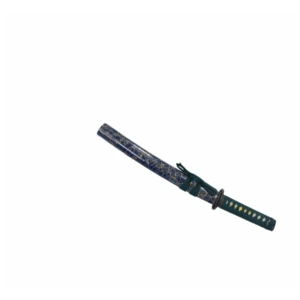 Japanese Forged 1050 Tantō in Green
120,00 €
Japanese Forged 1050 Tantō in Green
120,00 €
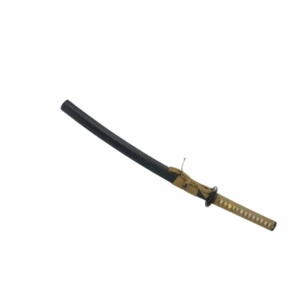 Japanese Forged 1050 Wakizashi in Brown
150,00 €
Japanese Forged 1050 Wakizashi in Brown
150,00 €
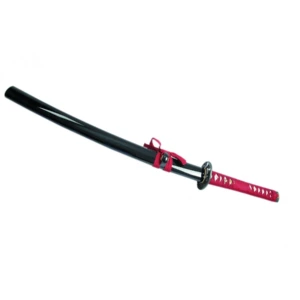 Japanese Maru Wakizashi with Red Handle
150,00 €
Japanese Maru Wakizashi with Red Handle
150,00 €
Next story: 5. From war to the path: when the sword becomes practice →