


For centuries, the Japanese swordsmith starting a sword always encountered the same trap. If he made the blade with hard steel, it cut wonderfully… until a poorly placed blow broke it in two. If he made it with softer steel, it withstood impacts better, but could bend and lose its edge. To cut or to resist: the balance had to be found. This whole story is about how, little by little, swordsmiths learned to combine both qualities.
In the early centuries of Japanese metallurgy, one of the fundamental materials was iron sand (satetsu, 砂鉄), which could be transformed into steel through reduction processes in traditional furnaces such as the tatara. This process yielded tamahagane (玉鋼), a material of irregular composition, with areas of different carbon content. The swordsmith's work began by selecting and preparing these different parts of the steel to construct the blade.
The first Japanese swords, dating back to the Asuka and Nara periods (飛鳥時代 and 奈良時代, 7th-8th centuries), when the Japanese court closely observed Tang Dynasty China and neighbouring Korean kingdoms, were straight and simple: the chokutō (直刀), well-suited for combat on foot and head-on, following models brought from the mainland. The curved, more elaborately worked blade came later, during the Heian period (平安時代, 794-1185), when warfare took on a significant equestrian dimension and the shape of the sword began to change.
Meanwhile, swordsmiths developed different methods for working steel. One of their techniques was to heat it and repeatedly fold it over itself to work and homogenise it. The process could generate numerous layers and, depending on how the material was worked, leave a characteristic pattern on the blade: the grain or forging texture that the Japanese call hada (肌).
This pattern may remind one of another famous steel: so-called Damascus. But it's worth pausing here for a moment, because two blades can look similar at first glance and yet have been created through completely different processes. Historical Damascus is related to wootz, a crucible steel produced on the Indian subcontinent whose characteristic pattern comes from its own internal structure. Pattern welding, on the other hand, consists of forge-welding different pieces or bars of iron and steel together and then manipulating them to create a visible pattern.
The Japanese hada belongs to a different tradition. It is the texture or forging pattern that appears on the surface of the blade as a result of working the steel and the way the swordsmith folds and shapes it. Therefore, although a Japanese blade and a steel commercially known as "Damascus" may display patterns that resemble each other, we shouldn't confuse them: the appearance may be similar, but the technique and history behind them can be different.
The leap towards more complex constructions came during the development of the medieval Japanese sword. In the Kamakura period (鎌倉時代, 1185-1333), when the military government established in that city made the samurai the ruling class, the demand for better swords—exacerbated after the Mongol invasion attempts of 1274 and 1281—drove the development of different ways to combine steels with different characteristics within a single blade.
The idea was simple: place the hardest steel where wear resistance and cutting ability were needed, and use softer, tougher steel in other parts of the blade to create a whole capable of better withstanding stress. Over time, different constructions developed, including the kobuse (甲伏せ), a harder steel shell around a softer steel core; the shihōzume (四方詰め), which combines different pieces for the edge, core, sides, and spine; and the sōshū kitae (相州鍛え), associated with the Sōshū school tradition and masters like Masamune (正宗).
Today, modern steels—such as 1045 or 1065—offer a much more consistent and predictable composition than traditional materials. A modern blade made of homogeneous steel, properly treated, can be perfectly robust. When a modern sword is laminated or constructed from different pieces of steel, it doesn't necessarily have to be for the same reason as that of the swordsmiths of old: it can be done to reproduce traditional constructions, obtain specific characteristics, or recover an aesthetic linked to historical forging.
Therefore, among modern swords, we can find 1045 and 1065 steel blades of simple construction, as well as others that use different traditional constructions or are inspired by them, such as kobuse, shihōzume, or sōshū kitae. When a blade is described as maru (丸), it generally refers to a simple construction in which the blade is not formed from a set of laminated steels in the same way as in composite constructions. This helps explain why a single catalogue might include maru families alongside kobuse, shihōzume, or sōshū kitae.
Modern swords also feature designations like 1050, 1060, 1065, or 1095, which identify different types of steel used in specific blades. It's important not to interpret these numbers as an automatic "better" or "worse" classification: a sword's final performance also depends on heat treatment, geometry, blade construction, and the specific characteristics of the piece.
And when the word "Damascus" appears, we now know that we must first ask what technique it actually describes.
The pattern on a blade can tell a story, but not all stories that appear similar originated from the same forge.
Pieces from this story
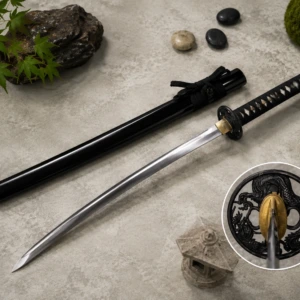 Japanese 1065 Steel Katana with Dragon Tsuba – 76 cm Blade
350,40 €
Japanese 1065 Steel Katana with Dragon Tsuba – 76 cm Blade
350,40 €
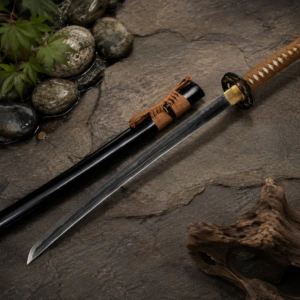 Japanese Shihōzume Katana in Laminated Steel – 76 cm Blade
700,80 €
Japanese Shihōzume Katana in Laminated Steel – 76 cm Blade
700,80 €
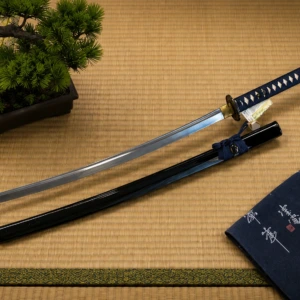 Japanese Sōshū Kitae Katana in Blue with Laminated Steel Blade
800,40 €
Japanese Sōshū Kitae Katana in Blue with Laminated Steel Blade
800,40 €
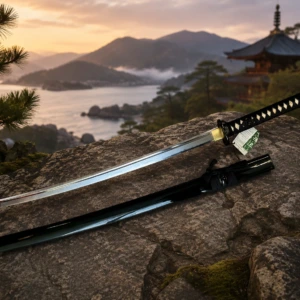 Japanese Black Kobuse Katana in Dual Steel – Laminated Blade
900,00 €
Japanese Black Kobuse Katana in Dual Steel – Laminated Blade
900,00 €
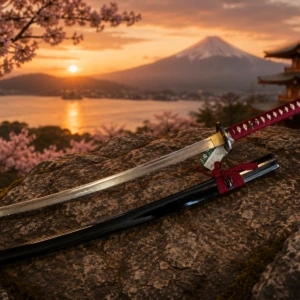 Japanese Red Shihōzume Katana with Laminated Steel Blade – Warrior Demon Guard
800,40 €
Japanese Red Shihōzume Katana with Laminated Steel Blade – Warrior Demon Guard
800,40 €
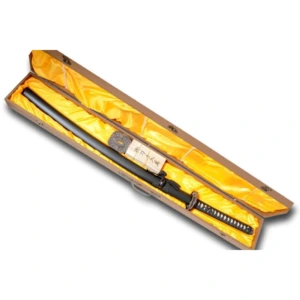 Japanese Maru Katana in Black - Set with 2 Tsuba, Mallet and Wooden Stand
220,80 €
Japanese Maru Katana in Black - Set with 2 Tsuba, Mallet and Wooden Stand
220,80 €
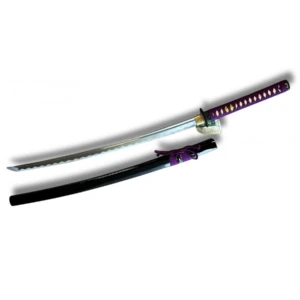 Japanese Maru 1060 Katana in Violet - Genuine Wavy Hamon
280,80 €
Japanese Maru 1060 Katana in Violet - Genuine Wavy Hamon
280,80 €
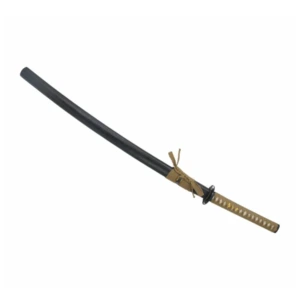 Japanese Forged 1050 Katana in Brown
150,00 €
Japanese Forged 1050 Katana in Brown
150,00 €
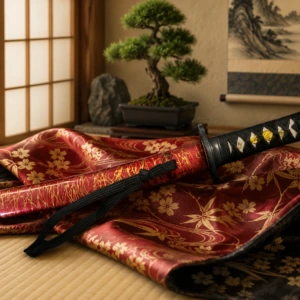 Japanese Red and Gold Tantō with Violet Blade – 1045 Steel
150,00 €
Japanese Red and Gold Tantō with Violet Blade – 1045 Steel
150,00 €
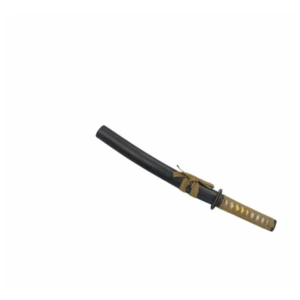 Japanese Forged 1050 Tantō in Brown
120,00 €
Japanese Forged 1050 Tantō in Brown
120,00 €
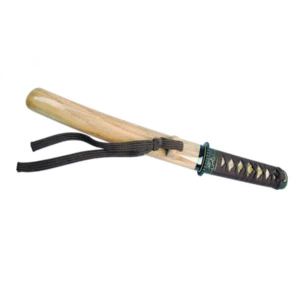 Japanese Maru Tantō in Natural Wood
120,00 €
Japanese Maru Tantō in Natural Wood
120,00 €
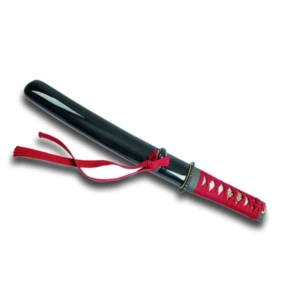 Japanese Maru Tantō with Red Handle
120,00 €
Japanese Maru Tantō with Red Handle
120,00 €
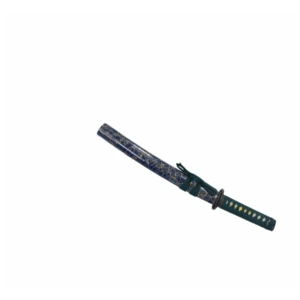 Japanese Forged 1050 Tantō in Green
120,00 €
Japanese Forged 1050 Tantō in Green
120,00 €
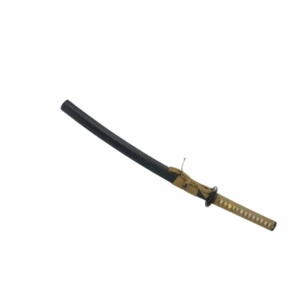 Japanese Forged 1050 Wakizashi in Brown
150,00 €
Japanese Forged 1050 Wakizashi in Brown
150,00 €
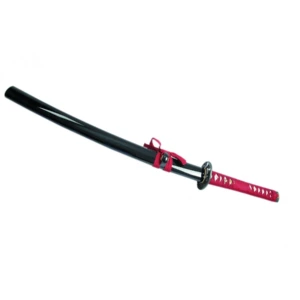 Japanese Maru Wakizashi with Red Handle
150,00 €
Japanese Maru Wakizashi with Red Handle
150,00 €